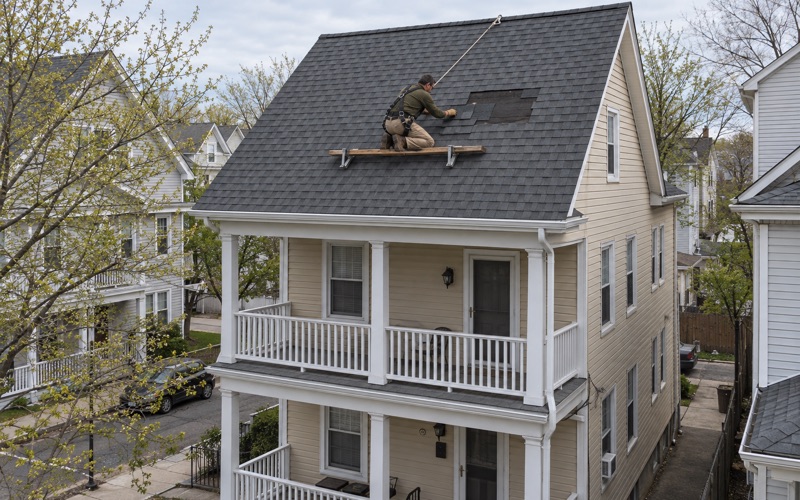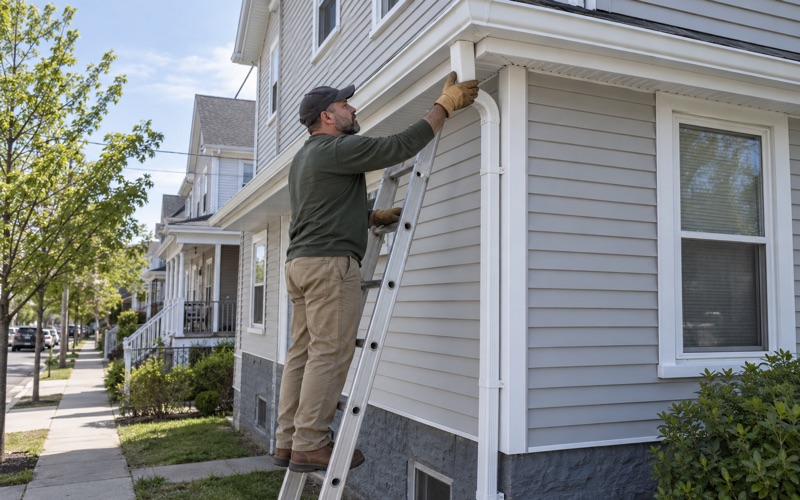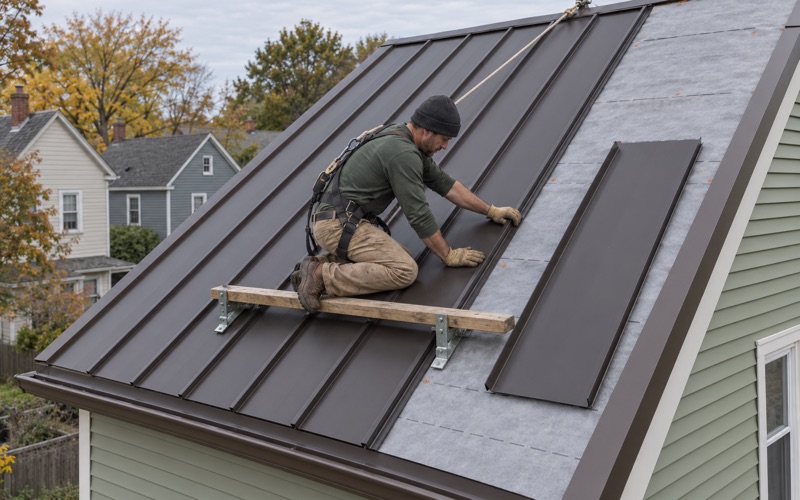
Perth Amboy Elite Roofing brings more than 20 years of experience to roofing in Asbury Park, where most of the calls we take come from a landlord rather than from the person living under the roof. That changes how a job is planned from the first phone call. A tenant upstairs needs to know when the crew is arriving, an owner needs a straight answer before spending money, and the work has to fit around a lease rather than the other way around.
Every leak call starts inside, in the attic or at the top-floor ceiling, before anyone climbs a ladder. Water rarely enters where the stain shows, so we trace it back to the real entry point before anything is priced. Once we know where it gets in, we tell the owner plainly whether a repair will hold or whether replacement is the honest conversation to have.
Our written estimates break the job into separate lines for tear-off, decking, underlayment, flashing, ventilation and gutters. An owner holding two bids can compare them item by item, and a property manager can forward our scope to the owner without rewriting a word of it.
Asbury Park’s Prewar Rental Housing
A City Built for Renting
Asbury Park is a renters’ city first. The 2024 five-year American Community Survey counts 5,425 of the city’s 7,499 occupied homes as rented, or 72.3 percent. Owner-occupants are the minority, so the person deciding on a roof is usually not the person who hears the drip first.
That gap shapes every job we take on here. A tenant reports a stain, the landlord or a property manager calls us, and the details pass through two or three people before anyone looks at the roof. We shorten that chain by sending photos and a written finding straight to the owner after the first visit, so the decision is made on what we saw rather than on a secondhand description.
Roofs Older Than Most Leases
The same survey dates 3,225 of the city’s 8,681 housing units, or 37.1 percent, to 1939 or earlier. Asbury Park was developed in 1871 as a residential resort by James A. Bradley, and by the 1890s its housing ran through a full range of Victorian architecture. Those older buildings take up a large share of our time here.
Roofs on buildings that old have usually been covered more than once. When we open one up, we often find stacked layers, tired board decking and flashing that has been reused through several roofs. New Jersey’s rehabilitation subcode, N.J.A.C. 5:23-6, calls for a full tear-off rather than another overlay where two or more layers are already in place, so we confirm the layer count before we put a price on paper.
Neighborhoods and Rooflines
We work in North Asbury, on the West Side and along the streets off Springwood Avenue, as well as around Deal Lake and Sunset Lake. The houses around Sunset Lake are mostly early-20th-century, and like much of the city’s older stock they carry dormers, valleys and chimneys that a newer house would not.
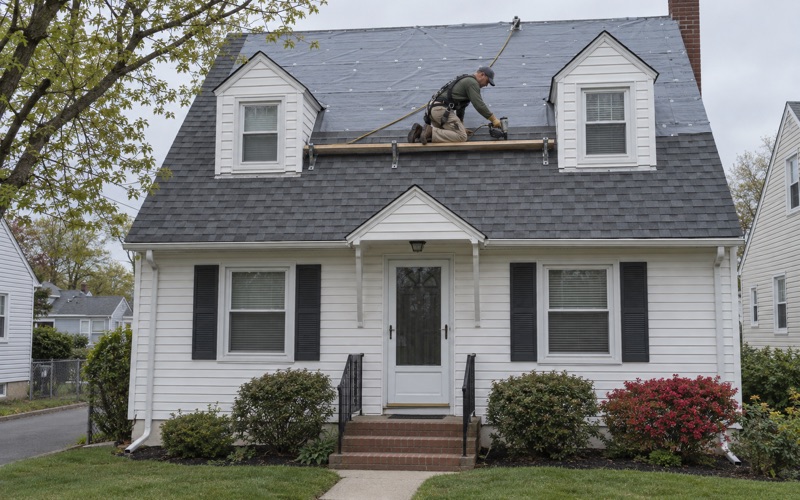
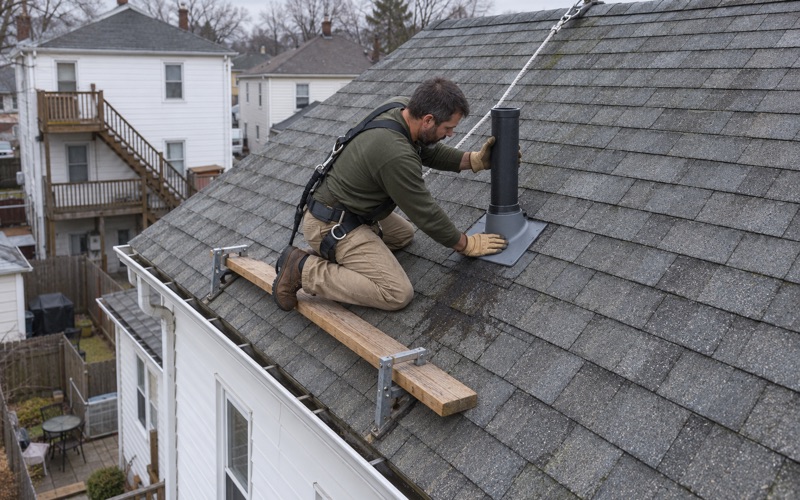
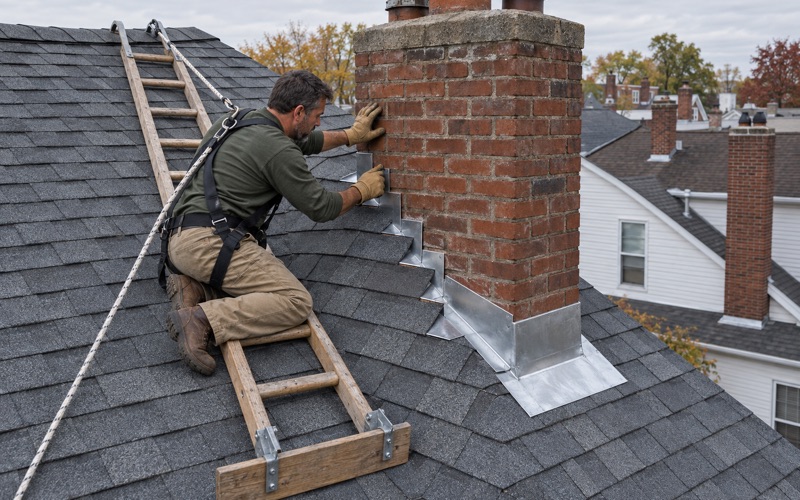
Older roof shapes give water more places to get in. We pay close attention to step flashing along dormer walls, the cricket behind a wide chimney, and the valleys where two slopes meet. On painted trim and fascia from before 1978, we follow the EPA lead-safe rule when that work is part of the job.
Looking for roofing closer to Wood-Ridge? See Roofing in Wood-Ridge.
Two- to Four-Family Houses and Their Roofs
Where Most Tenants Live
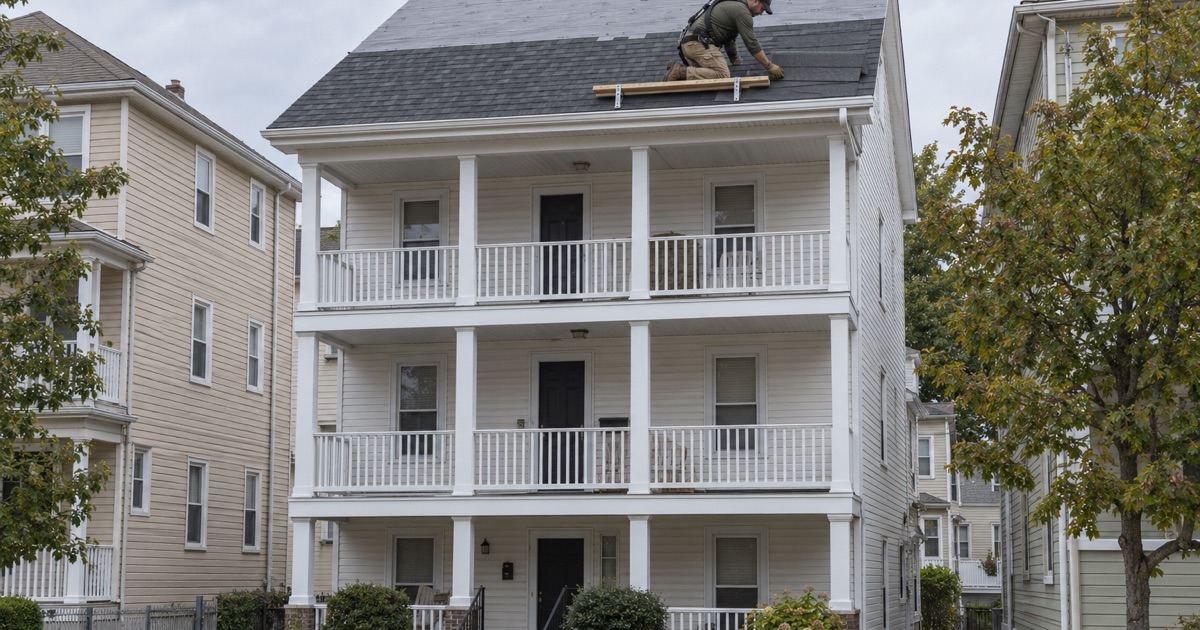
Detached houses make up only 22.4 percent of the city’s housing units. Another 1,759 units, or 20.3 percent, sit in buildings of two to four units, and renters occupy 1,367 of them. These are the buildings that shape a large share of roofing decisions in the city, often with a main pitched roof and a flatter section at the back.
A two- or three-family house puts more people under one roof than its footprint suggests. A leak over the top unit is one tenant’s ceiling, but water running down inside a wall can reach a second apartment before anyone reports it. We trace it floor by floor, so the owner knows which units were affected and which repairs belong to the roof.
Low-Slope Rear Sections
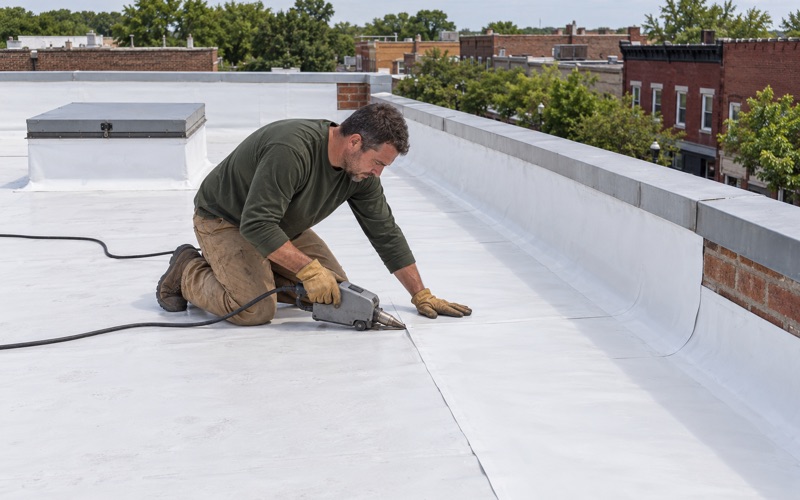
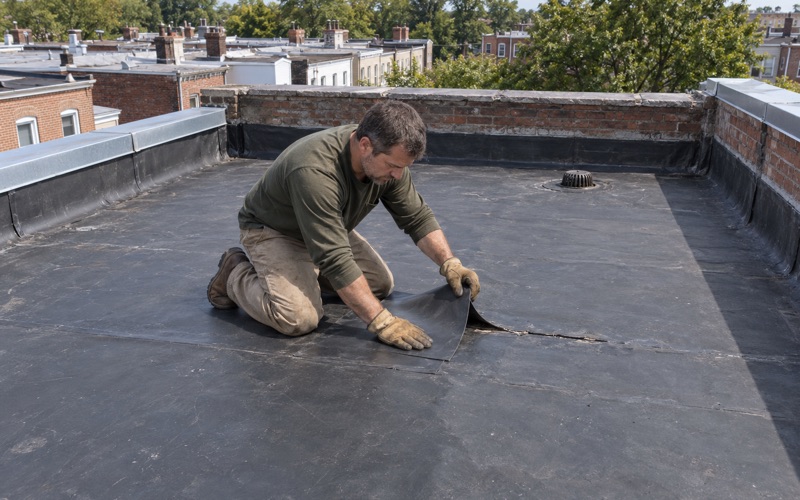
Many multi-family houses have a low-slope roof over a rear addition or porch, finished in modified bitumen, EPDM rubber or an older built-up surface. Patches pile up on these sections over the years because nobody sees them from the street. We check the seams, the edge metal and the drain or scupper, not just the most recent patch, because that is usually where the next leak starts.
When a rear section is past saving, we explain the choices in plain terms. Torch-down modified bitumen, EPDM and TPO each suit different conditions, from the amount of foot traffic to how the section drains. We tell the owner which one we would choose for that particular roof and why, and the reasoning goes into the written scope.
Who Signs Off on the Work
In New Jersey, replacing the roof covering on a detached one- or two-family house is ordinary maintenance under N.J.A.C. 5:23-2.7 and needs no permit, inspection or notice, though work affecting structure or fire safety is excluded. Three- and four-unit buildings, attached rows and larger buildings fall outside that exemption. Their roof work goes through the Asbury Park Construction Department at 1 Municipal Plaza, and we tell the owner which side of that line a building sits on before anything is scheduled.
Every contract we write follows New Jersey’s home improvement rules, including the three-business-day cancellation notice. The owner sees the full scope and the price in writing before a crew is booked, and nothing is added later without a conversation first.
Certificates of Occupancy, Year-Round and Seasonal
A Certificate for Each New Tenant
Asbury Park ties its rental rules to the change of tenant. A 2014 report in the Asbury Park Sun quoted the city’s code enforcement officer: a landlord must obtain a certificate of occupancy, a city document confirming a residence is in an acceptable state to be occupied, before new tenants move in.
We have not read the current ordinance or what that inspection covers, so we make no promises about it. What we can say is practical. A turnover is a deadline the landlord already has, and roof work planned around it is easier on everyone than work squeezed in after a new lease begins.
Summer Rentals From Memorial Day to Labor Day
The same report described a separate seasonal certificate covering Memorial Day to Labor Day, posted on the back of the front door with the tenants’ names, with the code department notified at each change of tenancy. Owners who rent by the week or the month in summer run a tight calendar with very little slack in it.
A roof leak in July is the hardest version of this problem. The unit may be booked through August, and a crew on the roof is the last thing a summer guest expects to see. We would rather find the weak spots in spring, while there is still time to fix them without canceling anyone’s stay.
Confirming the Details With the City
Fees and procedures reported in 2014 may have changed since, so landlords should confirm current requirements directly with the city’s code enforcement office. The same report noted that condominium owners also need a letter of approval from their association before renting.
Our part is simpler. We give the owner a written scope, a clear schedule and dated photos of the finished roof that can sit in the property file. When a roof is sound, we say so, and when it needs work, the paperwork shows exactly what was done and when.
Scheduling Roof Work Around Turnover
Planning Between Leases
The best window for a re-roof on a rental is usually the gap between one tenant leaving and the next moving in. An empty top floor lets us get into the attic, open a ceiling if needed and work without interrupting anyone’s day. We ask landlords for their lease dates early, so the job can be lined up with a vacancy instead of a guess.
When there is no gap, we work with the tenants in place. Everyone in the building gets notice of the start date, the working hours and where we need access, whether that is an attic hatch, a back yard or a rear porch roof. Nobody upstairs should learn about the job from the sound of a tear-off overhead.
Keeping Summer Clear
For buildings that carry a seasonal certificate, we steer replacement toward fall or early spring. A house that hosts summer guests should reach Memorial Day weekend with its roof work finished, not half done. Small repairs found during the season can usually be handled in a short visit, with the larger job written up and priced for the off-season.
Asbury Park sits in the National Weather Service’s Eastern Monmouth forecast zone, served by the Mount Holly office, and that forecast sets our daily calendar. We do not open a roof that cannot be dried in by the end of the day. If rain moves in, the tenants hear about the new date from us the same afternoon.
When the Old Roof Comes Off
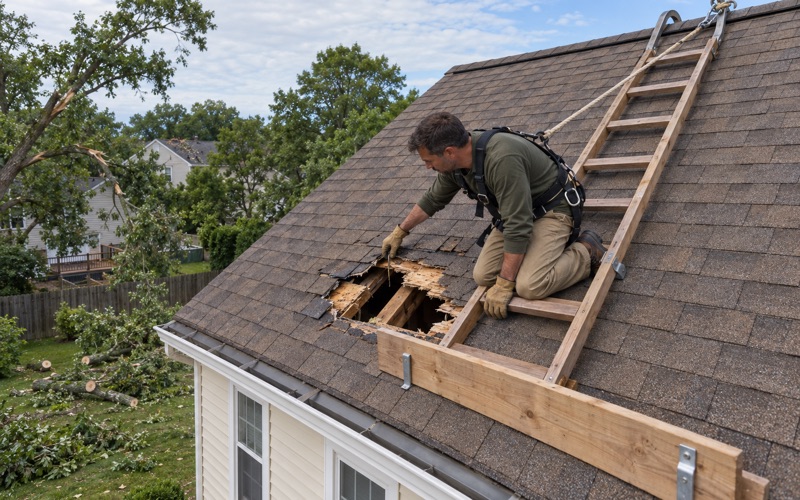
On prewar buildings, the decking under the old shingles is often the first surprise. We photograph any damaged boards and show them to the owner before replacing anything, at a per-sheet price already set in the contract. Step, counter and chimney flashing is replaced with the new roof rather than reused under fresh shingles.
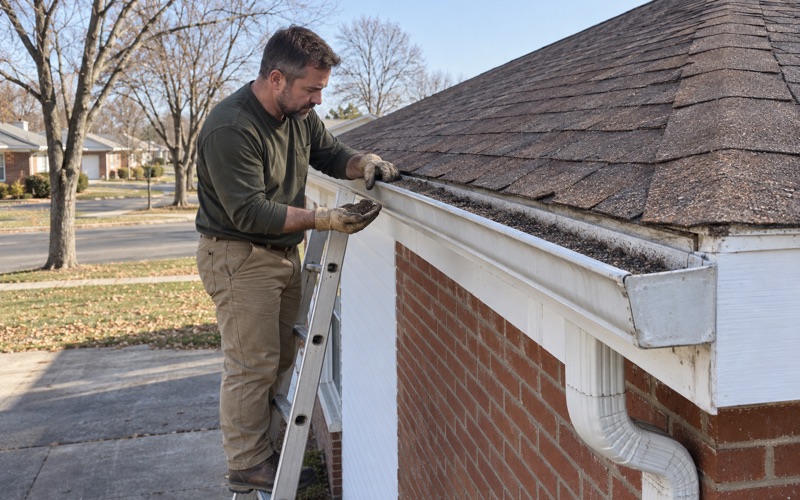
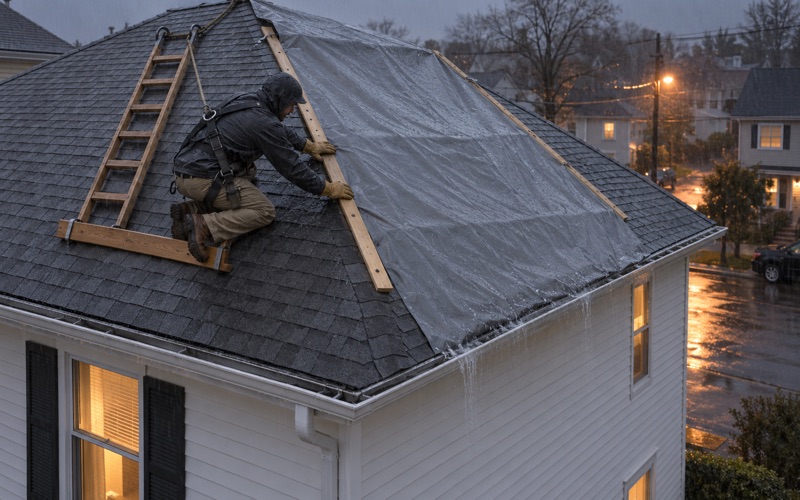
At the end of each workday, we clean the sidewalk, yard and gutters and run a magnet sweep for nails. In a building full of tenants, with children and pets using the yard, that matters as much as the roof itself. If storm damage brought us out, we photograph it, write it up for the owner’s own claim and meet the adjuster on site when asked.
- 20+ Years in Roofing
- Itemized Written Estimates
- Attic-to-Roof Leak Tracing