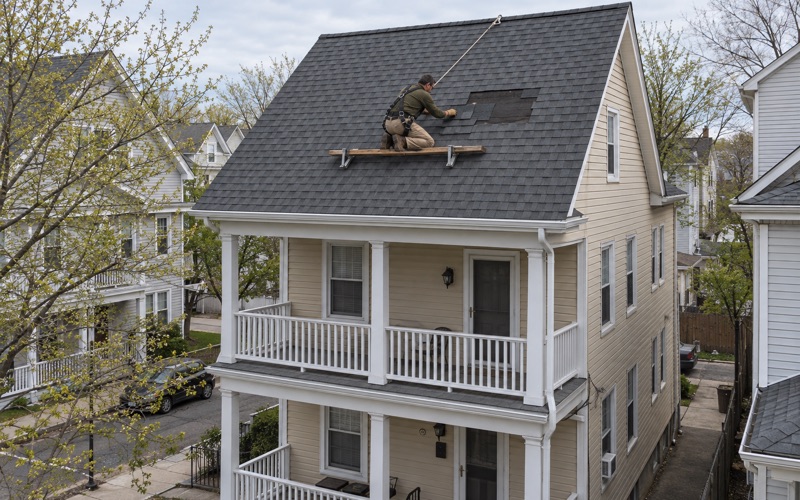
Perth Amboy Elite Roofing brings more than 20 years of work to roofing in Bound Brook, and much of what we see here is the roof over a rental. A leak in a building with tenants is not one household’s problem. It is several, stacked on top of each other, and the fix has to account for everyone living under it.
We start every leak call in two places: on the roof itself and in the attic or top-floor ceiling where the water shows up. Tracing it to the point where it actually gets in is what lets us price the right repair instead of quoting for a guess. Owners hear plainly whether a roof can be repaired before anyone mentions replacing it.
For landlords, the roof is also a line item on a maintenance plan. The sections below cover how New Jersey classifies small rental buildings, what the state’s maintenance standard says about roofs, how to time work around a recurring inspection cycle, and why a roof on a three-unit building goes through the borough’s Building Department when a detached single-family re-roof does not.
Small Rental Buildings and the Multiple Dwelling Rule
A borough of renters in small buildings
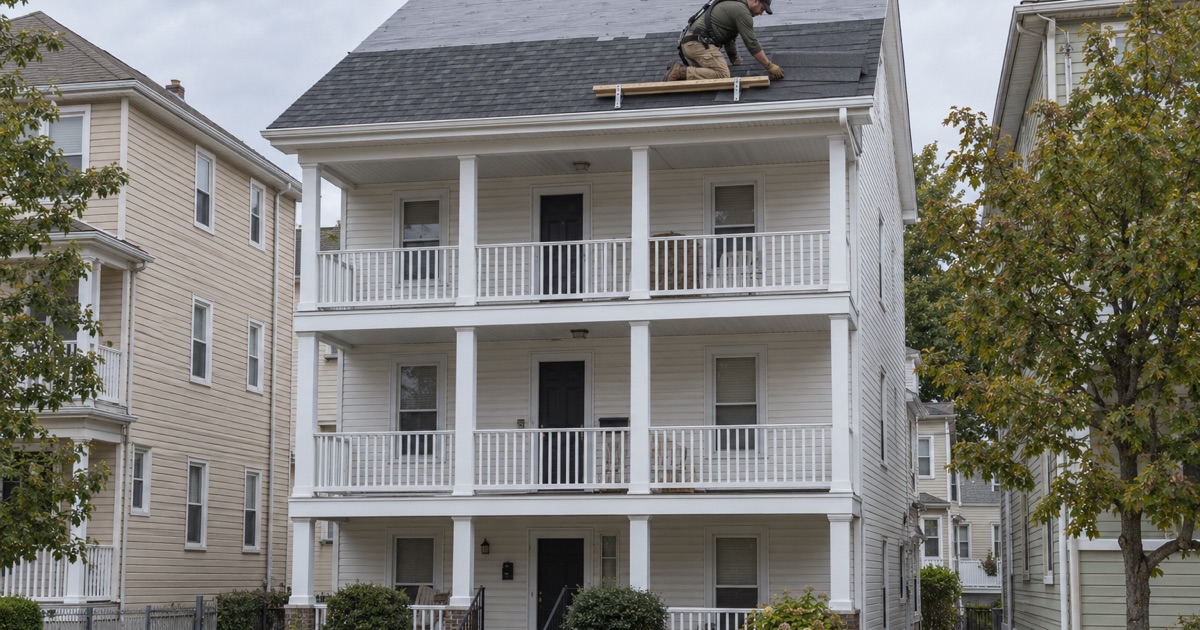
Bound Brook leans toward renting. Census survey figures put 55.2% of occupied homes in the borough as renter-occupied, and only about 42% of housing units are one-unit detached houses. Another 1,275 units, roughly 27% of the stock, sit in buildings of two to four units. That mix shapes the roofing work here more than any single style of house does.
The three- and four-family slice is the sharpest part of the picture. About 500 units, 10.6% of the borough’s housing, are in three-or-four-unit buildings, and 458 of the 468 occupied ones are rented. In practical terms, almost every one of those buildings has a landlord responsible for the roof and tenants who will notice first when it fails.
When a building counts as a multiple dwelling
New Jersey treats a building with three or more dwelling units as a multiple dwelling. The state Department of Community Affairs oversees these through its Bureau of Housing Inspection, and owners are responsible for registering their buildings. The governing law also directs the Bureau to inspect these properties on a five-year cycle, so the roof belongs to a building that gets looked at on a schedule.
We do not perform those inspections and have no role in them. What we do is make the roof itself sound, document the work, and give the owner a clear written record of what was repaired or replaced. That paperwork is the owner’s to keep alongside whatever else they track for the building between inspection visits.
The owner-occupied exception
Not every three- or four-unit building falls under the definition. State law allows an exemption for owner-occupied buildings of no more than four dwelling units that meet further conditions, and those conditions are worth confirming with the state rather than assuming. If you live in one unit and rent the others, check where your building stands before planning around a cycle that may not apply.
For our part, the roofing work is the same either way. A sound roof keeps water out of every unit whether or not the building is registered, and the tenants on the top floor feel a leak just as quickly. What changes is the timing pressure, and that is something only the owner can confirm for their own building.
Looking for roofing closer to Red Bank? See Red Bank Roofing.
What the State Maintenance Code Asks of a Roof
Keeping water out
The maintenance standard for multiple dwellings is N.J.A.C. 5:10. Its section on leakage, drafts and infestation, 5:10-7.4, groups the roof with exterior walls, windows, skylights, doors and foundations, and requires all of them to be maintained to keep water out. Areas showing rot, leakage, deterioration or corrosion are to be treated or restored, not left for later.
That wording matters for how we approach a rental roof. A stain on a top-floor ceiling is evidence of exactly the condition the code names, and a patch that hides the stain without finding the entry point leaves the problem in place. So the attic or top-floor check comes first and the roof surface second, before we write a number down.
Damaged or badly worn material
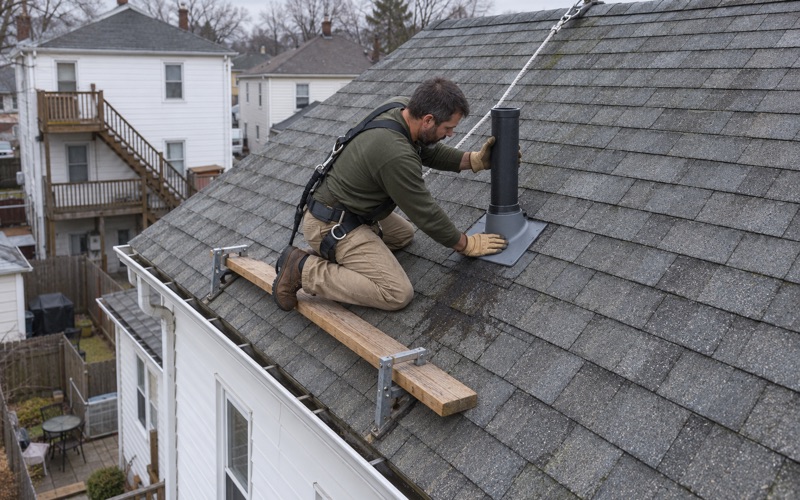
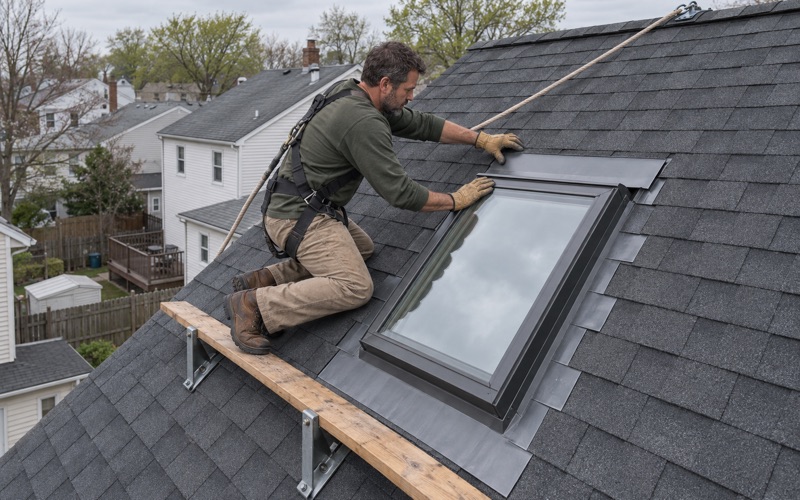
The same section says damaged or badly worn material shall be repaired or replaced. That is a broader standard than “it isn’t leaking yet.” Shingles that have shed their granules, flashing pulled away from a wall, a cracked pipe boot or a split seam on a flat section can all count as worn material well before water reaches a tenant’s ceiling.
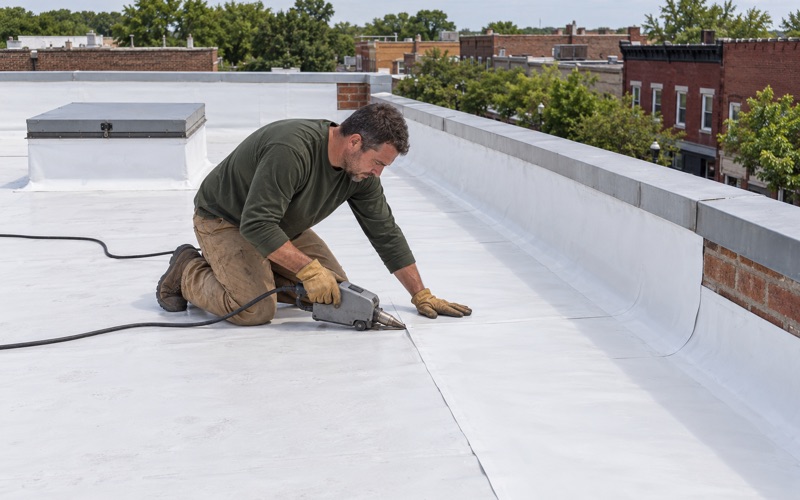
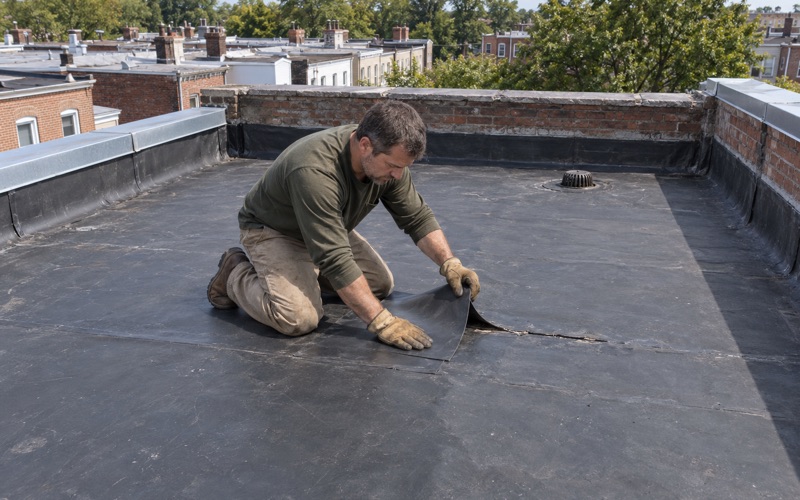
Where a building has a low-slope section, we look at the seams, the edge metal and the drain or scupper rather than just the patch someone left last time. Those are the spots where an EPDM membrane or a torch-down modified bitumen roof usually lets go first, and they are easy to miss from the ground or from a quick look over the edge.
Repair first, replacement when it is due
Because the standard allows repair or replacement, we tell owners straight away which one the roof actually needs. Plenty of worn roofs have years left once flashing is reset and a few failed areas are rebuilt. When the field of the roof is past saving, we say that too, and explain why a repair would only be money spent against the next leak.
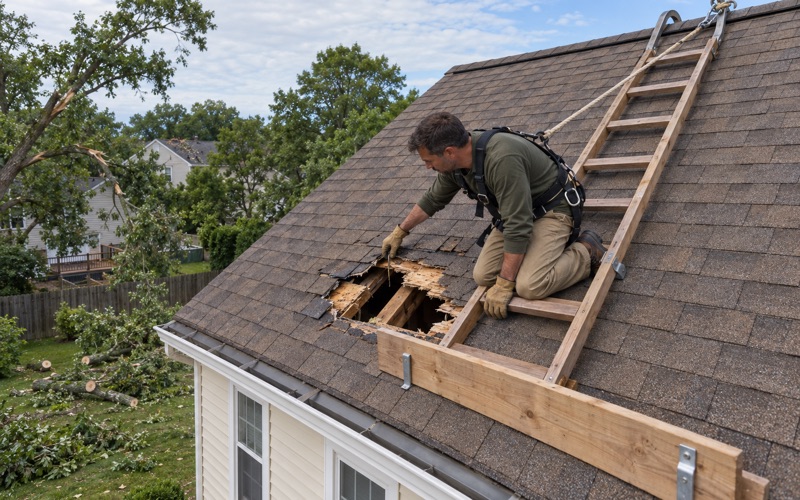
Storm damage gets the same honest read. We photograph what the wind or hail did and write it up for the owner’s own insurance claim, and we will meet the adjuster on site when asked. Every decision about the claim stays with the owner and the insurer. Our part is an accurate record of the roof’s condition.
Planning Roof Work Around the Five-Year Cycle
Working on a calendar instead of a crisis
A five-year inspection cycle gives a landlord something most homeowners lack: a known window. A roof that is getting tired in year two can be repaired or budgeted for replacement on the owner’s timetable, rather than after a tenant reports water in a light fixture during a winter storm. Planned work is also easier to fit around leases, weather and cash flow.
We suggest owners of registered buildings ask for a roof assessment well ahead of when they expect their next inspection, leaving time for any repair or replacement to be scheduled properly. We are not predicting what an inspector will note, and we promise no outcome. We simply make sure the roof meets the plain test of the code: water stays out and worn material is dealt with.
Tenants living under the work
Roofing over occupied apartments takes coordination that a single-family job does not. We schedule rental buildings with the tenants in mind, so the people on the top floor know when the crew is arriving, how long the noise will run, and whether anyone needs access to an attic hatch or a rear stairwell. Clear notice keeps the job moving and the landlord’s phone quiet.
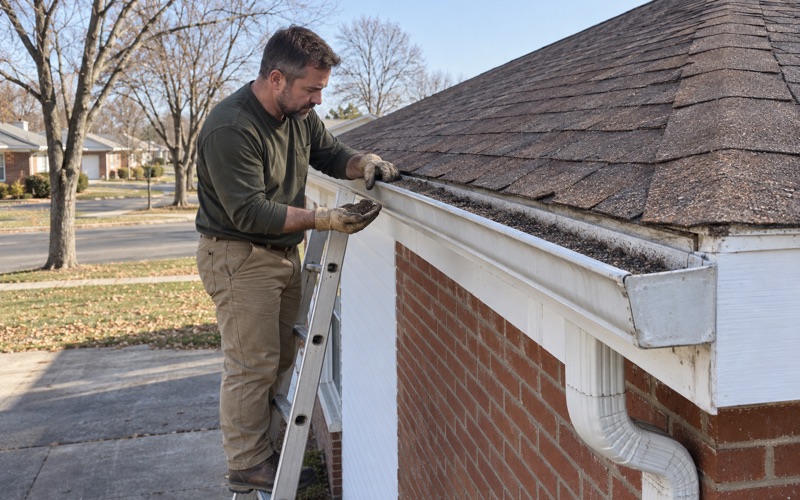
At the end of every work day we clean the sidewalk, the yard and the gutters, and run a magnet sweep for loose roofing nails. On a building where several households share one entrance and one patch of yard, that daily cleanup is not a courtesy. It is what keeps a tenant’s tire or a child’s foot away from a dropped nail.
Scopes a landlord can budget against
Our written scopes break the job into separate lines for tear-off, decking, underlayment, flashing, ventilation and gutters. An owner comparing two estimates can line them up item by item and see where the difference actually is. For a landlord tracking costs across several properties, that breakdown also makes it easier to record what was done and when.
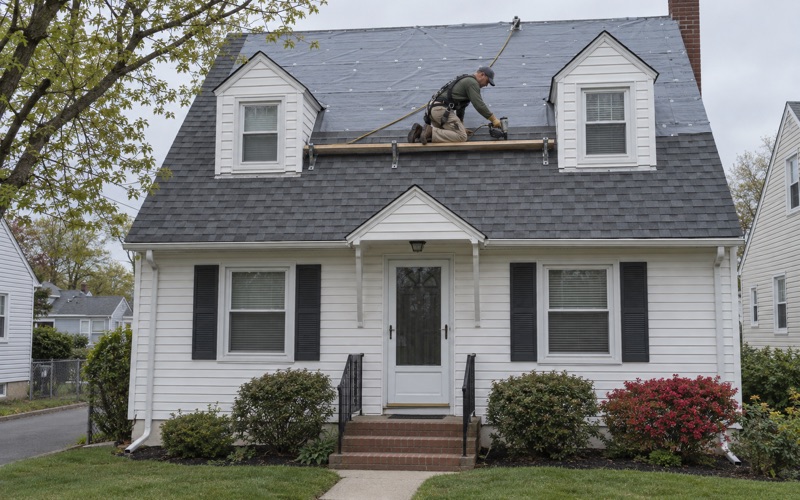
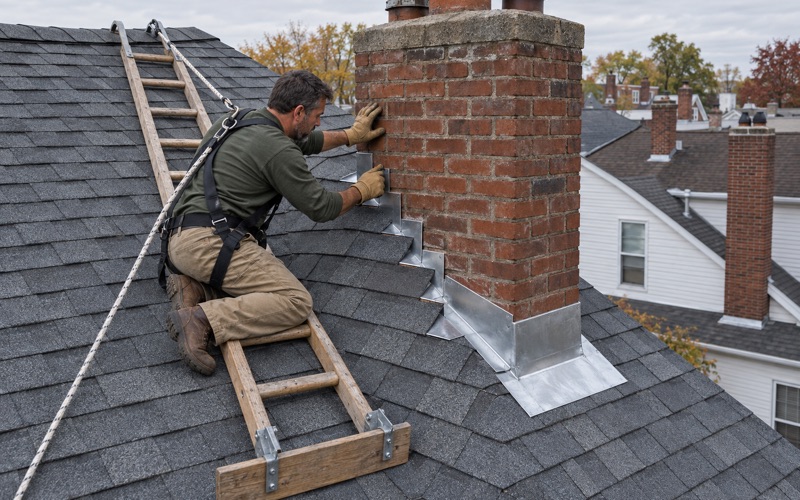
Decking damage only shows once the old roof is off. When we find rotted or soft sheathing, we photograph it and show the owner before replacing it, at a per-sheet price already fixed in the contract. Step, counter and chimney flashing is replaced along with the roof rather than reused, since old flashing under new shingles is a common source of the next leak.
Why a Three-Unit Roof Is Permit Work
The one- and two-family exemption
New Jersey’s construction code treats roof-covering repair or replacement on a detached one- or two-family dwelling as ordinary maintenance. Under N.J.A.C. 5:23-2.7, ordinary maintenance needs no permit, no inspection and no notice to the enforcing agency. Many Bound Brook owners of detached houses and two-family homes have heard, correctly, that a re-roof is not something they file for.
That exemption is narrow. It covers detached one- and two-family dwellings only. An attached house and any building of three or more units sit outside it, which means the same re-roof on a three- or four-family rental remains permit work. Owners who have redone a detached house without paperwork sometimes expect the same treatment on a larger building, and it does not apply.
The Bound Brook Building Department
Permits in the borough go through the Bound Brook Building Department, headed by a Construction Official as chief administrator of the enforcing agency, with its offices at Borough Hall, 230 Hamilton Street. We build the permit step into the schedule for any building of three or more units, so the tear-off date is never set before the paperwork allows it.
Permit work also shapes the written contract. Our contracts follow New Jersey’s home improvement rules, including notice of the three-business-day cancellation right on contracts over $500. On a rental building, that window gives an owner time to compare scopes, weigh the cost against the inspection calendar, and confirm a start date with tenants before work is committed.
Older roofs and stacked layers
Bound Brook’s housing skews old. About 27.6% of units were built in 1939 or earlier, and nearly 40% before 1950.
Older roofs often carry more than one layer of shingles, and New Jersey’s rehabilitation subcode, N.J.A.C. 5:23-6, calls for a tear-off when a roof already has two or more layers or is slate, wood shake or tile. We check the layer count before quoting.
A building with solar panels needs one more step. We plan the panel removal and reinstall into the schedule rather than discovering it on the day the crew arrives. On a rental, that matters, because every extra day on the roof is another day of notice, noise and access requests for the tenants living upstairs.
- 20+ Years in Roofing
- Itemized Written Estimates
- Attic-to-Roof Leak Tracing