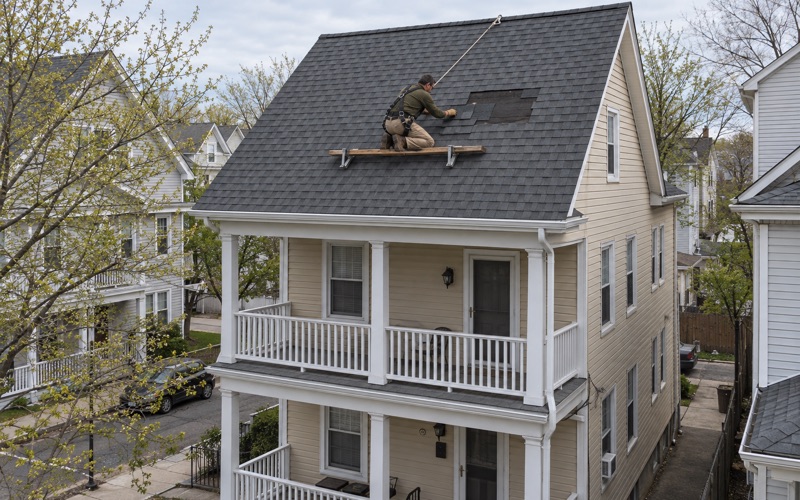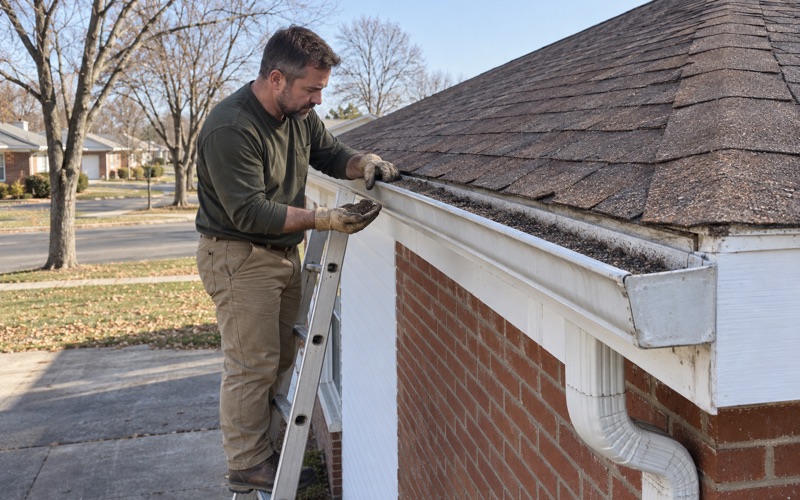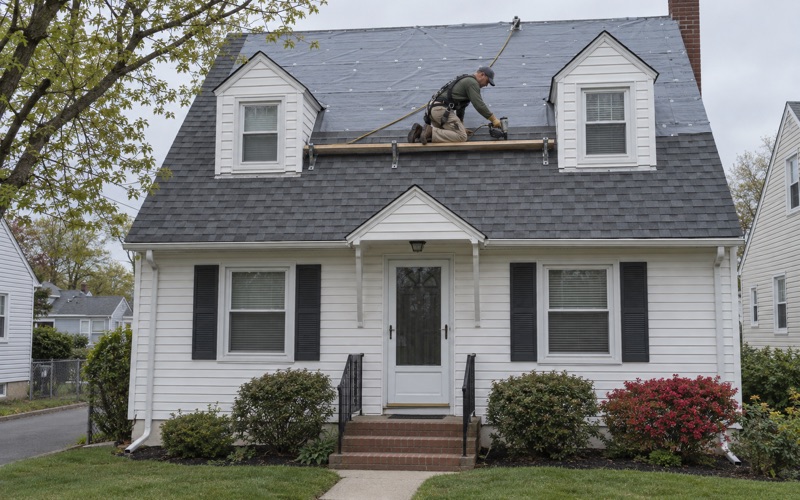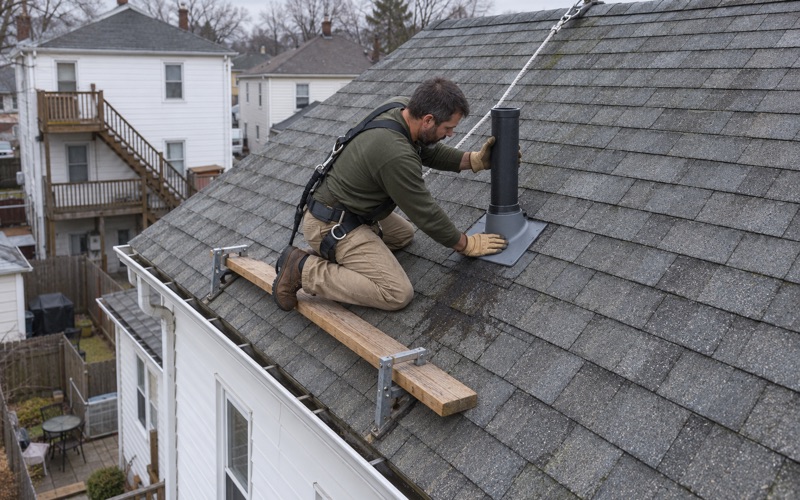
Perth Amboy Elite Roofing brings more than 20 years in the trade to roofing in Guttenberg, and the call we plan for most carefully is the one that comes after something has already gone wrong. A fire in a neighboring unit, a storm that peels back a section of covering, or water spreading across a top-floor ceiling usually ends with a roof rebuilt on an insurance claim.
On that kind of job our part is narrow and specific. We measure the damage, photograph it, and write the scope, so the owner and the insurer are both reading from the same set of numbers. That paperwork is what a claim is settled on, and it has to hold up when someone checks it against the roof.
What we do not do is negotiate. New Jersey reserves that role for a different professional, and this page explains where the line falls, what a fire inside the walls can do to roof framing, and how the rebuild runs once the numbers are agreed. Before any of that, we give a straight answer on whether the roof can be repaired at all.
Storefronts Below, Apartments Above
Small Buildings on a Four-Block Town
Guttenberg is a town in northern Hudson County, only four blocks wide north to south, and a 1983 New York Times description called it an old community of two-story row houses, small stores and light industry. Corner buildings in that pattern still put a storefront at street level with apartments over it, so one roof covers a business and the households above.
Most of the town’s homes are rented: of 5,203 occupied units, 3,123 are renter-occupied, according to Census survey figures. For a mixed-use roof that means a leak or a loss reaches several parties at once, from the shop owner to the tenants upstairs, and we schedule access with all of them in mind so nobody is surprised when the crew arrives.
The November 2021 Fire on 70th Street
On November 19, 2021, fire struck 201 70th Street, which 1st Responder News described as a remodeled three-story, wood-frame, mixed occupancy building with a restaurant on the first floor and apartments above. North Hudson Regional Fire and Rescue responded, and the report states no cause. We had no part in that building’s response or repair, and we mention it only for what the report says about how the fire moved.
According to the account, the fire traveled up the walls to the roof, moved through voids on one side of the building, and broke through the roof of the structure. Firefighters pulled tin ceilings to find fire that was hidden from view. In any building framed that way, the damage visible from the sidewalk is usually only part of what has to be rebuilt.
Why Hidden Framing Changes the Scope
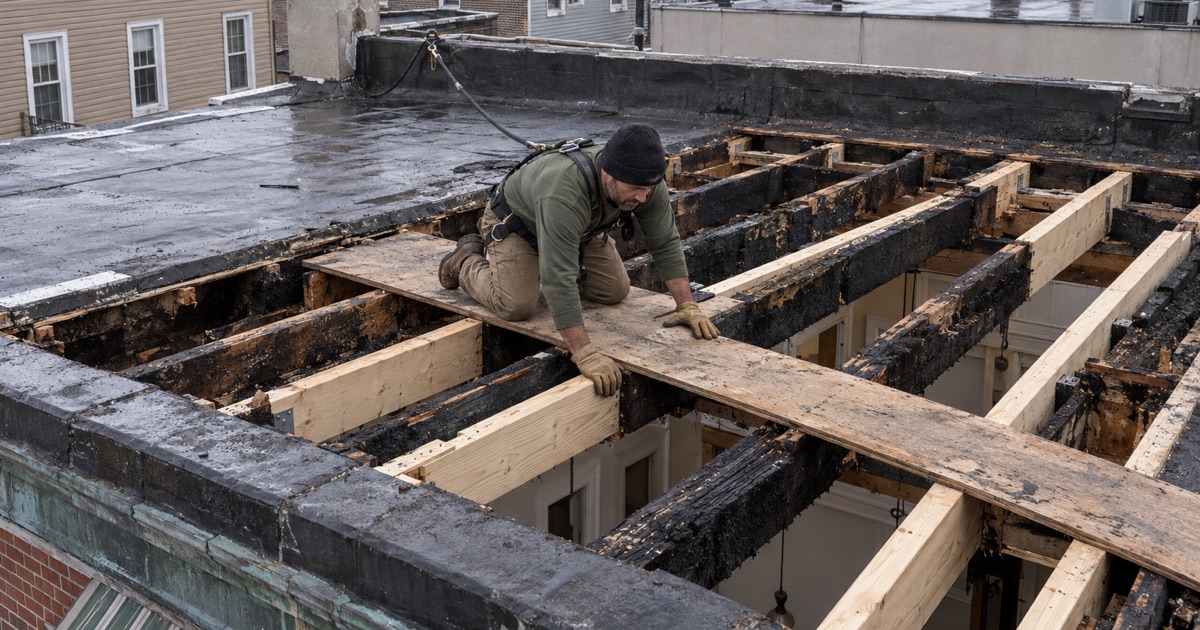
Heat and smoke that run up a wall void reach the rafters, the sheathing and the top-floor ceiling joists before they reach the shingles or membrane. A charred rafter can sit under covering that still looks intact, and water from the firefight soaks insulation and decking that nobody has opened yet. A scope written only from the roof surface misses the part of the loss that matters most.
That is why every inspection we do includes a look from below, in the attic or through the top-floor ceiling, as well as on the roof itself. We trace where heat, smoke or water actually went before anything is priced. On a storm loss the same habit finds the wet decking behind a single missing section, which is often wider than the hole above it.
Looking for roofing closer to Wallington? See Roofing Services in Wallington.
Documenting Roof Damage for an Insurance Claim
Photographs Before Anything Moves
The first visit after a loss is about recording the roof as it is. We photograph the surface, the edges, the flashing, any opened framing and the ceilings below, and we tie each photo to a location on a roof sketch. Pictures taken after cleanup or temporary tarping cannot show what the damage looked like, so we take them first.
Storm damage is written up for the owner’s own claim, in plain language a non-roofer can follow. If the building has more than one owner or a commercial tenant on the ground floor, we give the same set to whoever is filing, so the record does not depend on anyone’s memory of which section lifted first. Every photo is dated, so the order of damage, tarping and repair stays clear.
A Measured Scope With Separate Lines
A useful scope is measured rather than estimated by eye. We record roof areas, edge lengths, flashing runs and every penetration, then list tear-off, decking, underlayment, flashing, ventilation and gutters as separate items with quantities beside them. An adjuster, an owner or a second contractor can then compare our numbers line by line instead of arguing over a single total.
Decking is the line that most often changes once the old roof comes off. When we find damaged sheets, we photograph them and show the owner before replacing them, at a per-sheet price already set in the contract. On a fire loss that photo record also shows which sheathing was charred and which was only wet, a distinction the claim file needs.
Meeting the Insurer’s Adjuster on Site
When the owner asks, our crew will meet the insurance company’s adjuster at the building. We walk the roof together, point out what the photographs show, and answer technical questions about framing, flashing and materials. Hidden damage is easier to assess when the person writing the insurer’s estimate can see the opened void or the soft decking in person.
That meeting is a technical walk-through, not a negotiation. We describe the roof and what it will take to rebuild it; the owner, or a representative the owner has hired, decides what to accept. We will not tell the adjuster, or the owner, what figure to agree to. Keeping those roles separate protects the owner, and in New Jersey it is also the law.
Who May Negotiate a Claim in New Jersey
The Public Adjuster Rule
New Jersey’s Public Adjusters’ Licensing Act sets the rule in N.J.S.A. 17:22B-3(b): no adjuster shall act on behalf of an insured unless licensed as a public adjuster. The definition in N.J.A.C. 11:1-37.2 reaches anyone who, for money, commission or any other thing of value, acts or aids in any manner on behalf of an insured in negotiating or effecting the settlement of a property claim.
The same definition covers anyone who advertises for or solicits that work, and the statute allows a penalty of up to $2,500 for a first offense. The rule is statewide, so it applies to a storefront on a Guttenberg corner exactly as it does anywhere else in New Jersey. A public adjuster works for the policyholder, while the insurer’s own adjuster works for the company.
Where Our Role Stops
Because of that rule, we do not negotiate with an insurer for anyone, and we do not settle or push a claim on an owner’s behalf. If a roofer offers to do that, the offer itself is a reason to ask questions. What we can do is supply the evidence: the photographs, the measured scope and the written estimate.
Owners who want someone negotiating for them can hire a public adjuster, and we will work from the same documents whoever is representing the building. We also do not tell anyone what a policy will or will not pay for; that is a question for the policy itself, the insurer and the owner’s own representative.
Questions to Settle Before Signing
A rebuild on a home is still a home improvement contract, and we write ours to New Jersey’s home improvement rules. That includes the three-business-day cancellation right on contracts over $500 under N.J.S.A. 56:8-151, so an owner under pressure after a fire has time to read the terms and change course. The notice is part of the written contract we hand over.
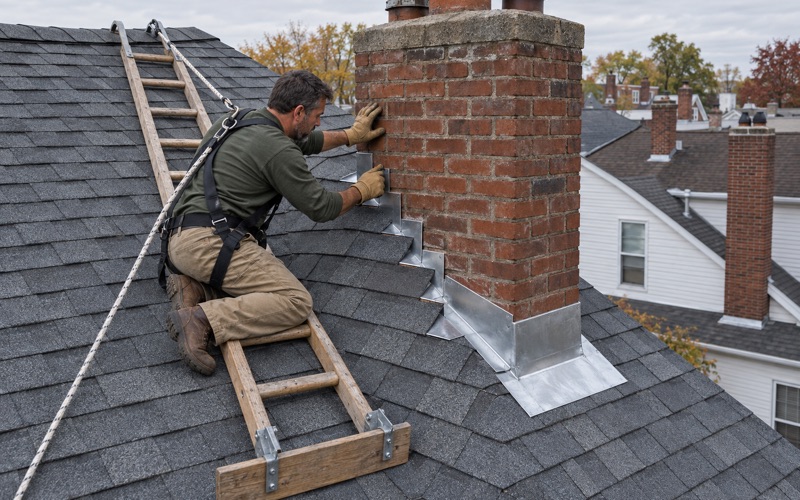
Before signing, ask whether the estimate separates each line, how decking will be priced if it turns out to be damaged, and whether the old flashing is being reused. We replace step, counter and chimney flashing along with the roof rather than tucking old metal under new material. Reused flashing is one of the shortcuts that is hardest to see once a roof is finished.
Rebuilding the Roof Once the Claim Is Settled
Framing and Sheathing First
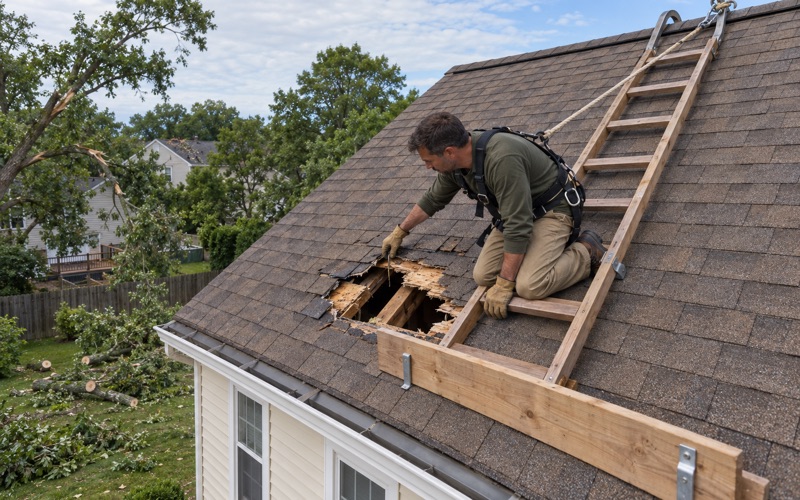
Once the owner and insurer have settled, the rebuild starts where the fire or storm did the most harm, which on a wood-frame building is often below the covering. Charred rafters are sistered or replaced, damaged sheathing comes out, and the top-floor ceiling is opened wherever the inspection showed hidden damage. Only then does new decking go down over sound framing.
Structural repair of that kind is construction work, not ordinary maintenance, and it goes through the Guttenberg Building Department at 6808 Park Avenue. New Jersey’s ordinary-maintenance list under N.J.A.C. 5:23-2.7 covers re-covering a detached one- or two-family house, and a three-story building with a shop and apartments falls outside that item. We plan the Building Department’s inspections into the schedule rather than treating them as a delay.
New Covering and the People Upstairs
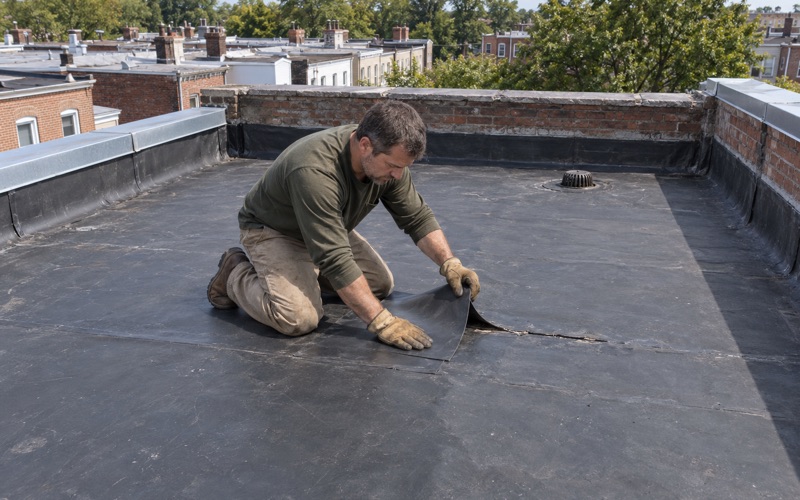
With the framing sound, we install the new covering the scope called for, whether architectural shingles on a pitched section or a membrane such as EPDM or TPO on a low-slope rear roof. Low-slope areas get attention at the seams, the edge metal and the drain or scupper, because those are the places water tends to find its way back in.
Tenants are told when the crew arrives and which rooms or stairways we need, and the shop below is kept open wherever the work allows. At the end of each day the sidewalk and gutters are cleaned and swept with a magnet for nails, which matters on a block where customers and residents share the same few feet of pavement.
When a Repair Is the Honest Answer
Not every loss needs a full rebuild. A storm that tears off one section of a pitched roof, or a small fire contained to one unit, may leave most of the framing and covering sound, and we say so plainly before replacement comes up. The scope then prices the repair and shows exactly where it begins and ends.
Where solar panels sit on the roof, their removal and reinstall go into the schedule from the start rather than being discovered on the day. Either way, the owner ends up with one written record running from the first photographs through the finished roof, which is useful long after the claim is closed.
- 20+ Years in Roofing
- Itemized Written Estimates
- Attic-to-Roof Leak Tracing