Perth Amboy Elite Roofing installs metal roofing in Perth Amboy, NJ, serving surrounding cities including South Amboy, Metuchen, South River, Highland Park and Roselle Park. With 20+ years on local roofs, we know where metal earns its higher price and where a good shingle or membrane roof is the better buy.
Metal makes the most sense on porches, low-pitch sections, steep roofs where an owner wants to avoid ever re-roofing again, and houses close enough to the bay that fastener and flashing choices matter. Every exposed metal item, from panels to screws to flashing, is named in the estimate so you know exactly what is going on the roof.
Standing Seam Metal Roofing
How Standing Seam Panels Work
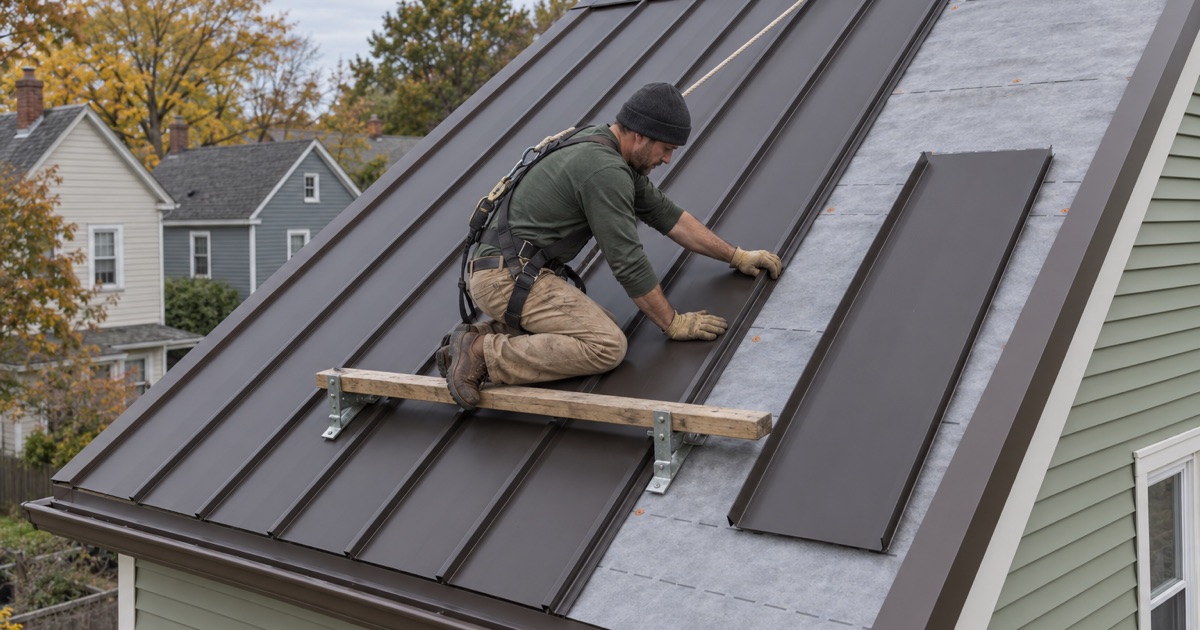
Standing seam panels run from eave to ridge in single lengths, joined along raised seams that stand above the flat of the panel. The fasteners are hidden under the seams, held by clips that let the metal expand and contract with temperature. With no exposed screws to loosen and no horizontal joints, water has very few places to get in. The raised seams also give a clean, linear look that suits modern additions and older houses alike, depending on the panel profile and color.
Snap-Lock and Mechanically Seamed Panels
Snap-lock panels click together and suit most steep residential roofs. Mechanically seamed panels are folded together with a seaming tool, making a tighter joint that tolerates lower pitches and standing water better. We recommend the profile based on the roof pitch and how the water collects, not on which one is quicker to install.
Flashing and Trim Details
A metal roof is only as watertight as its trim. Ridge caps, eave and rake trim, valley pans and the flashing at walls and chimneys are all formed to match the panels. Where a metal roof meets a brick chimney or a sidewall, the flashing has to be detailed so the panel can still move without tearing the seal.
Metal Roofing Materials for a Bay Setting
Coated Steel and Aluminum Panels
Painted steel with a metallic coating is the most common metal roofing, and aluminum is the usual choice where salt exposure is heavy because it does not rust. Both are finished with factory paint systems in a wide range of colors. We explain the coating and paint system on each option so you can compare them honestly.
Fasteners and Mixed Metals
Near Raritan Bay and the Arthur Kill, the fasteners and flashing matter as much as the panels. We specify stainless steel or hot-dipped galvanized fasteners and flashing metal compatible with the panels, because two dissimilar metals in contact can corrode each other quickly in salt air.
Copper flashing next to a steel panel, or plain steel screws in aluminum, are the kinds of mismatches that shorten a metal roof’s life. Listing each metal in the estimate is how we keep those mistakes out.
Underlayment and Condensation Control
Metal panels go over a solid deck with a high-temperature synthetic underlayment or a self-adhering membrane beneath them. The underlayment protects the deck from condensation that can form on the underside of the panels on cold nights, and from wind-driven rain at the seams. Attic ventilation still matters under metal, just as it does under shingles.
Where Metal Roofing Fits on Local Houses
Porch Roofs and Low-Pitch Sections
Front porches and shallow rear sections are often too flat for shingles to shed water reliably, yet not flat enough to call for a full membrane. A standing seam porch roof handles that pitch well and adds a finished look to the front of the house.
Full Roof Replacements in Metal
On a full replacement, a metal roof costs more than architectural shingles, but it can outlast several shingle roofs when it is installed and maintained properly. It makes the most sense for owners planning to stay in the house for the long term, and for roofs where frequent tear-offs would be expensive or disruptive. New Jersey’s re-roofing rule still applies: two existing layers, or a slate, wood shake or tile roof, must come off before metal goes on.
Snow, Gutters and Solar
Snow slides off metal more readily than off shingles, so we add snow guards over entrances and check that gutters and their hangers are strong enough for sliding snow and ice. Standing seam roofs also accept solar mounting clamps that attach to the seams without piercing the panels, which suits owners planning panels in the future.
Maintaining and Repairing a Metal Roof
Checking Seams, Clips and Trim
A metal roof needs less attention than shingles, but it is not maintenance-free. Once a year, and after major storms, it is worth checking that ridge caps and trim are tight, that sealant at penetrations has not cracked, and that no panel has lifted at the eave. Catching a loose piece of trim early keeps wind from getting underneath and peeling it further.
On exposed-fastener panels, the rubber washers under each screw age in the sun. Replacing worn screws with new ones of the correct size and material is routine upkeep on those roofs.
Scratches, Coatings and Corrosion
Scratches that reach bare metal can start to corrode, especially near salt water. Small scratches are touched up with paint matched to the panel’s finish, and we look for rust staining around fasteners and cut edges where the coating is thinnest. Keeping leaves and debris off the panels also helps, since wet debris holds moisture against the finish.
Repairing Leaks Around Penetrations
When a metal roof leaks, the cause is usually at a penetration or a transition rather than in the open panel: a vent boot, a chimney flashing, or the joint where metal meets a shingle or membrane roof. We repair those details with flashing made for metal roofs, so the panel can keep expanding and contracting without breaking the seal again.
- 20+ Years in Roofing
- Itemized Written Estimates
- Attic-to-Roof Leak Tracing