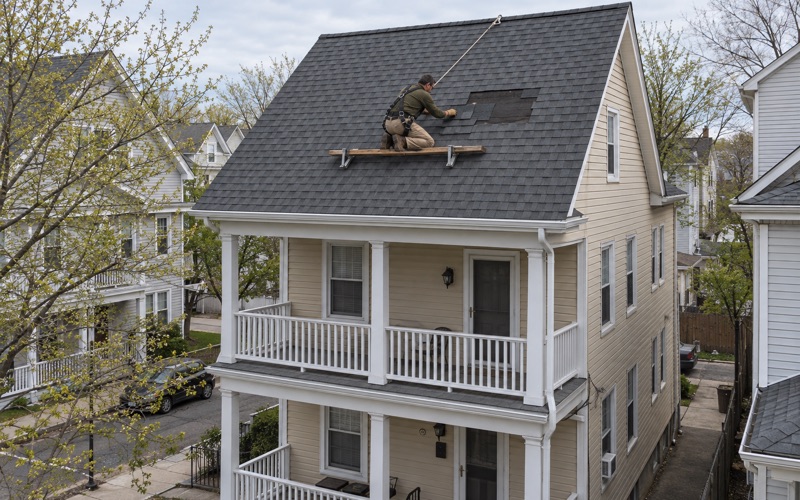
Perth Amboy Elite Roofing brings more than 20 years in the trade to roofing in Tinton Falls, where a good share of calls start with a question a detached-house owner never has to ask: whose roof is it? A leak over a townhouse bedroom can belong to the owner, to the association, or to both. We sort that out before anyone talks about price.
Our first visit on any leak covers two places: the roof surface and the attic or top-floor ceiling underneath it. Water on attached homes travels along party walls and shared flashing, so the stain is rarely under the opening. Once we know where it gets in, we tell you plainly whether a repair will hold or whether the roof is near the end of its life.
For a board, the same habits come in a different form. We write scopes that list tear-off, decking, underlayment, flashing, ventilation and gutters as separate lines, so a manager can set two bids side by side and see exactly where they differ. That matters more when the money comes from a reserve fund that every owner pays into.
Attached Homes and Who Owns the Roof
A Quarter of the Borough’s Housing Is Attached
The Census Bureau’s 2024 five-year survey counts 9,124 housing units in Tinton Falls. Of those, 2,262 are one-unit attached homes, 24.8% of the total, sitting beside 4,057 detached houses. Owners live in 2,011 of the attached units, so most townhouse roofs here sit over people who also carry a stake in how the whole row is maintained.
Age matters as much as type. Half of the borough’s housing, 4,597 units, went up between 1980 and 1999, the two decades when the population grew from 7,740 to 15,053. Many roofs from that building wave are on their second covering or approaching the point where one is needed, and on attached rows the units tend to age together.
Owner or Association: Read the Documents First
Whether a townhouse roof is the owner’s or the association’s depends on the community’s master deed and bylaws, and those differ from one development to the next. Some associations maintain roofs as common elements, while others leave each roof to the owner beneath it. We ask to see the governing language before we quote, because the answer decides who signs the contract.
If the roof is the association’s, a unit owner who calls us about a leak still gets the inspection and a written note of what we found. That note goes to the property manager, who can open a work order under the association’s own process. We do not start work on a common element on one owner’s say-so.
Where the Responsibilities Meet
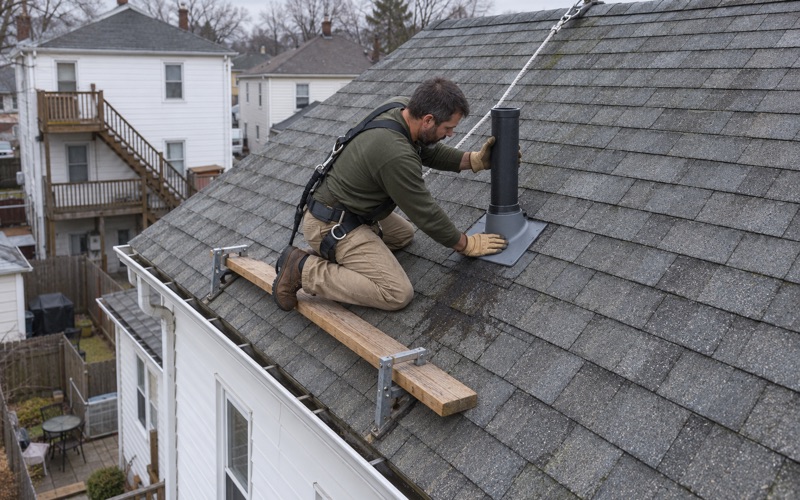
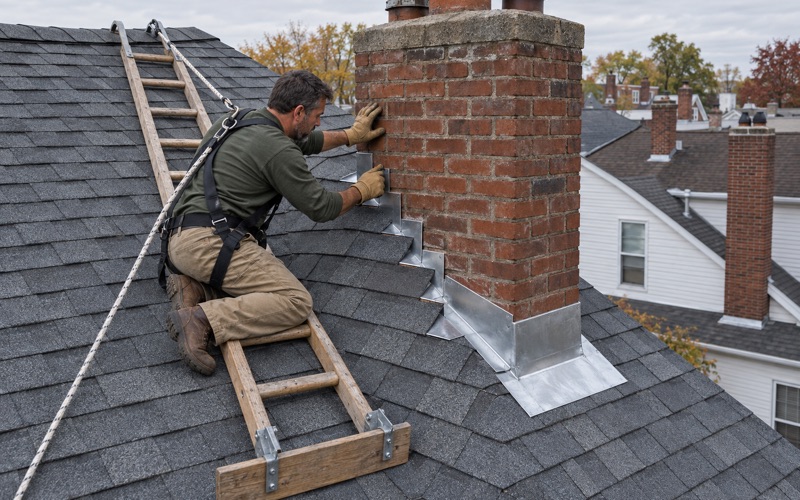
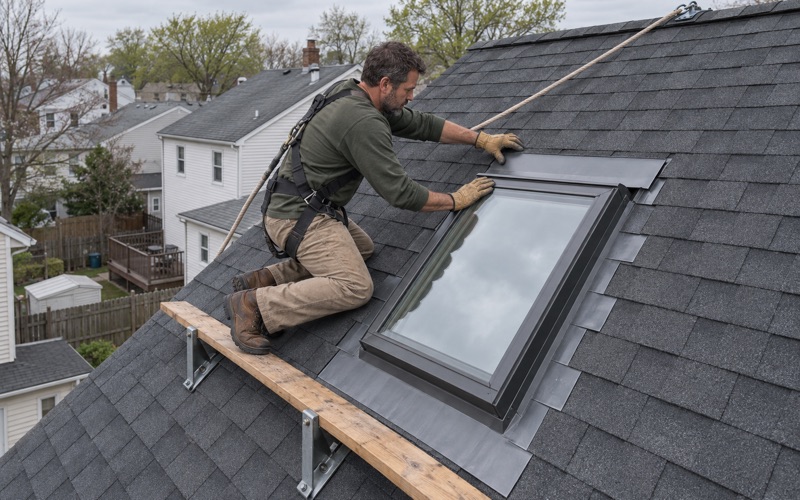
The trouble spots on attached homes are usually at the seams between responsibilities: a skylight the owner added, a bathroom fan vent cut through later, or a chimney chase serving one unit. Those penetrations may be the owner’s even when the field of shingles is not. We flag each one in the scope so nobody is surprised by whose budget it lands in.
Step and counter flashing where a raised unit meets a lower neighbor is another shared edge. We replace that flashing with the roof rather than bending the old pieces back under new material, and on a partial job we say in writing where our work stops and the neighbor’s roof begins. A clean line on paper prevents an argument on the ladder.
Looking for roofing closer to North Arlington? See Roofing in North Arlington.
Reserve Studies and the 30-Year Funding Plan
What the 2024 Law Requires of Associations
New Jersey’s P.L.2023, c.214, signed in January 2024, added a requirement that any association of a planned real estate development undertake and fund a capital reserve study of the capital assets it is obligated to maintain. The study must carry a 30-year funding plan. The state Department of Community Affairs lists roofs among the common areas such a study covers.
The obligation sits with the association, not with individual owners, and associations with less than $25,000 in total common area capital assets are exempt. The study has to be prepared by a reserve specialist credentialed through the Community Associations Institute or by a State-licensed engineer or architect. We are none of those, and we do not prepare the study itself.
Where a Roofer Fits Into the Study
What we can give a board or its reserve preparer is field information. On a walk of the row we note the covering type, visible wear, flashing condition, ventilation and any decking that flexes underfoot, and we photograph what we see. The preparer decides how to use that in estimating remaining life; the conclusions in the study are theirs.
We can also price a replacement in the same line-item format we use for single homes, so the reserve figure rests on a real scope rather than a rule of thumb. A line-item number is also easier for a board to explain to owners. When the plan is updated in later years, a fresh walk-through shows whether the roofs are aging faster or slower than the schedule assumed.
What the Schedule Means for Owners
In a community where the association maintains the roofs, a re-roof becomes a board decision paid from reserves on a timetable, not a bill that lands on one household after a bad storm. For an owner, that usually means patience: a worn roof may be on the list for a particular year, and repairs in the meantime keep it watertight until then.
Owners who want to know where their building stands can ask the board or manager for the current funding plan. If the roof work is scheduled years out and the leak is today, a targeted repair is usually the right call, and we will say so rather than push a replacement the reserves have not reached.
Re-Roofing a Row of Attached Homes
Planning the Whole Row at Once
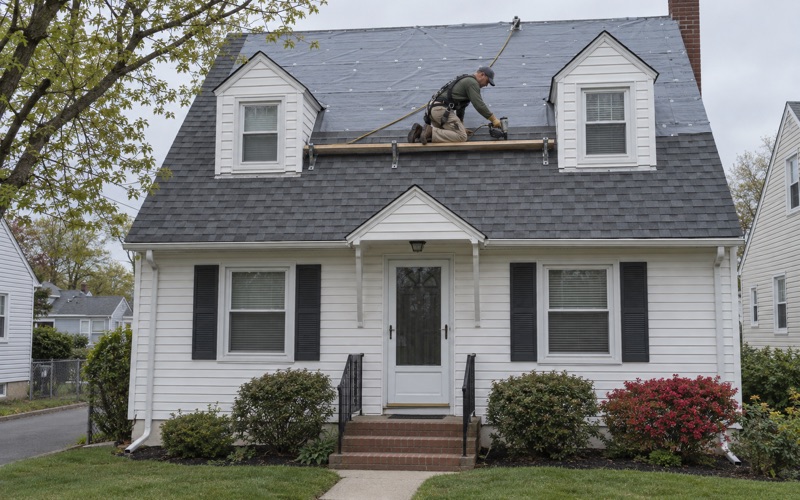
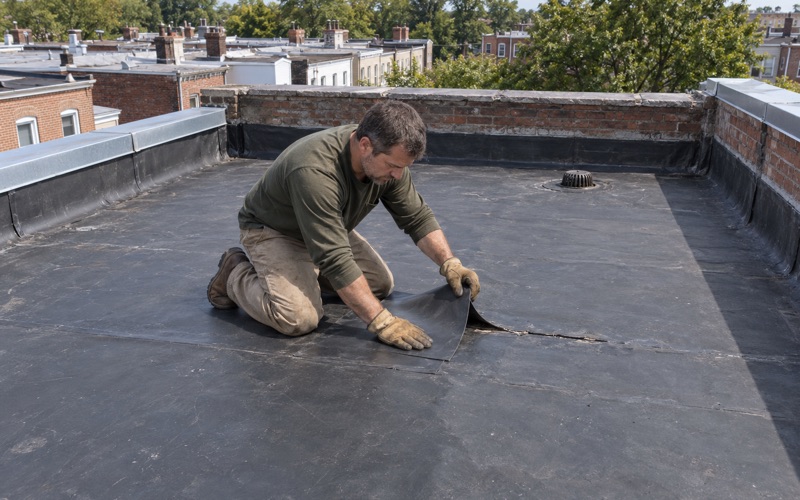
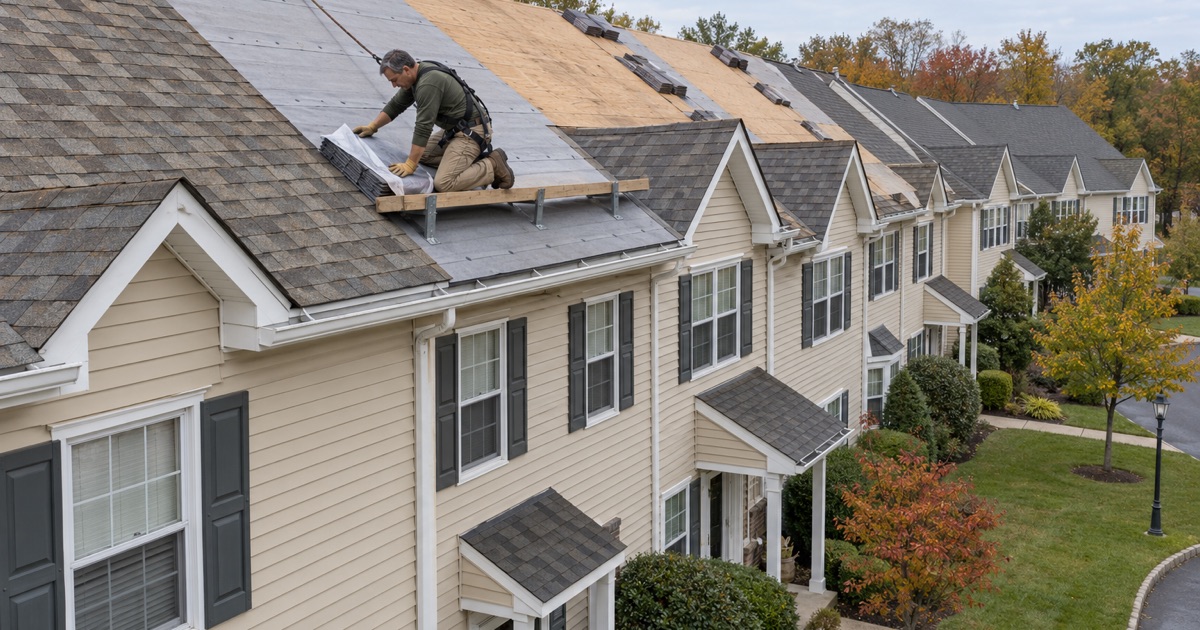
A row of attached units shares ridges, valleys and walls, so replacing one roof at a time leaves seams where new material laps onto old. When a board schedules a row together, we can run underlayment, drip edge and ridge vent continuously across the building. The result is one roof system instead of several patched to one another.
Ventilation is easy to get wrong on attached rows, because each unit’s attic is often a separate space behind a party wall. We check intake at the soffits and exhaust at the ridge unit by unit, so one attic is not starved while its neighbor is overvented. The net free area goes into the scope as a number, not a phrase.
Review at the Construction Department
The state’s ordinary-maintenance exemption for roof coverings applies to detached one- and two-family dwellings. Attached single-family rows and multi-unit buildings fall outside it, so that work goes to the Tinton Falls Construction Department at 556 Tinton Avenue. The department’s page says permits are reviewed within 20 days of a complete submission and that most applications are completed within a week when all information is present.
The same page notes that a building permit will not be issued until zoning or other prior approvals are in hand. We build that lead time into a row schedule, and we give the board a start date only after the paperwork is moving, not before. Each household on the row hears from us before the crew arrives, with the dates and any access we need to an attic hatch.
Decking, Flashing and Cleanup Across Many Units
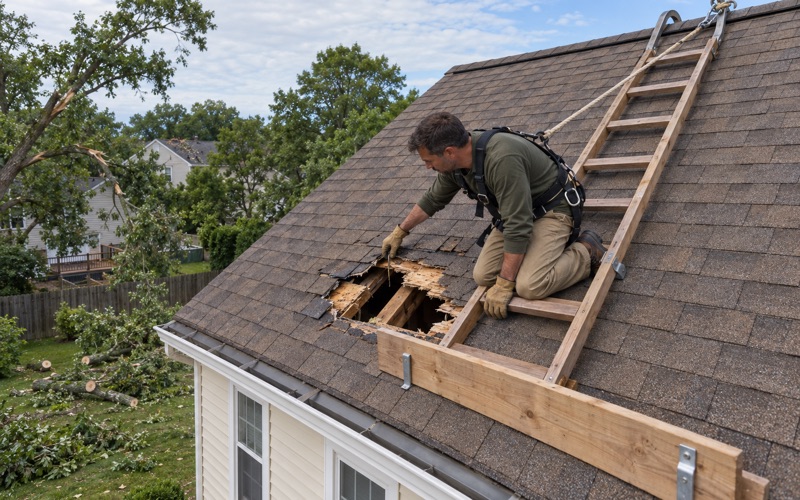
Once the old roof is off, soft or delaminated decking shows up unit by unit. We photograph every bad section and show it to the manager before it is replaced, at the per-sheet price written into the contract, so a row of twelve units does not produce twelve surprise change orders. The photos go into the board’s file with the final invoice.
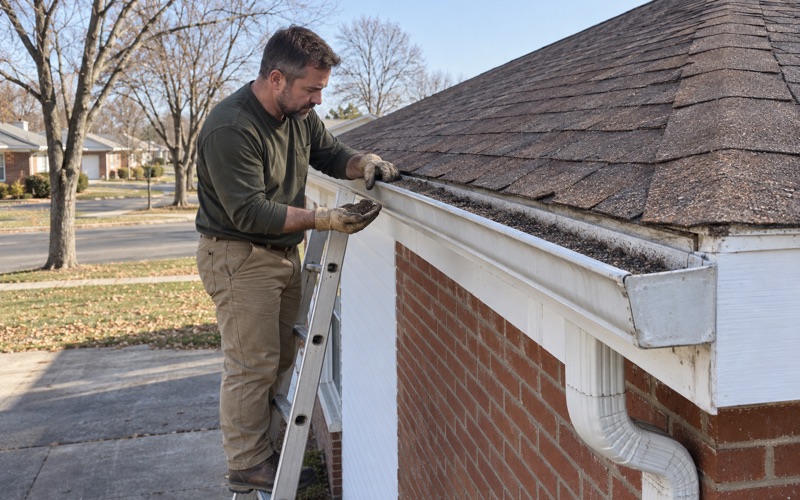
Attached communities often have shared walks, parking courts and landscaped strips right under the eaves. At the end of each day we clear the walks and gutters and run a magnet across the ground for nails, which matters more where children and neighbors are walking past occupied units all afternoon. Dumpster placement is agreed with the manager before delivery.
What a Single Owner Can and Cannot Decide
Repairs, Warranties and Paperwork
Where the association maintains the roof, replacing one section, choosing a different shingle color or changing the vent layout is normally a board matter rather than an owner’s call. Those choices affect the whole building’s look and warranty coverage. What an owner can do is report problems promptly and in writing, with photos of any ceiling stain, and keep a copy.
Warranty paperwork on an association job goes to the board, which holds it for every unit on the roof. Owners who sell should know that the roof coverage belongs to the association’s records rather than to their closing file, and a buyer’s inspector may need to ask the manager for it.
When the Roof Is the Owner’s
In communities where each owner keeps their own roof, the decisions are yours, but the row still matters. We match the existing shingle line and color where we can, tie new flashing properly into the neighbor’s roof, and leave the party-wall edge sealed so the next owner along does not inherit a leak from your job.
Your contract with us is written to New Jersey’s home improvement rules, including the three-business-day cancellation right on contracts over $500. If a storm caused the damage, we photograph it and write it up for your own claim, and we will meet the insurance adjuster on site if you ask.
Solar, Newer Homes and Local Weather
Where an attached owner has added solar panels, a row replacement gets more complicated. We put panel removal and reinstallation into the schedule from the start, and on an association roof we make sure the board and the panel owner have agreed on who arranges it before tear-off day. Nobody wants to discover that conflict with a crew already on the roof.
Newer attached housing is still going up in the Fort Monmouth Charles Wood Area, and the Census survey counts 991 units built in 2010 or later. Those roofs are young, but the same owner-versus-association questions apply from day one. The borough sits in the National Weather Service’s Western Monmouth forecast zone, so we watch that forecast when a row is open.
- 20+ Years in Roofing
- Itemized Written Estimates
- Attic-to-Roof Leak Tracing