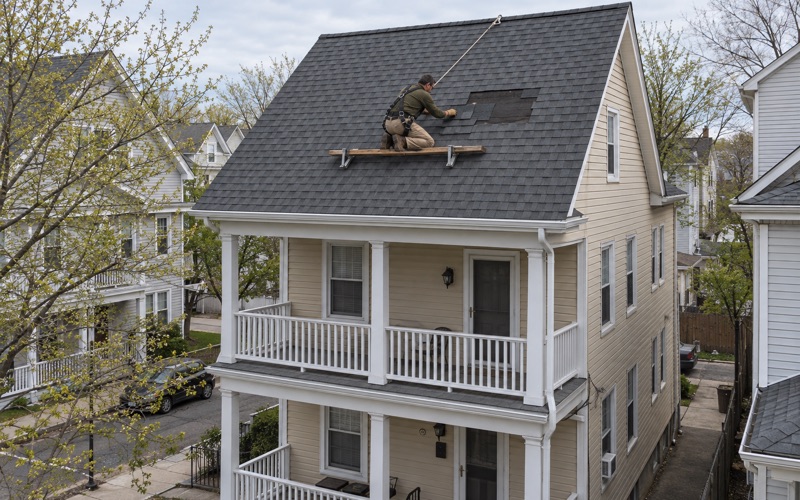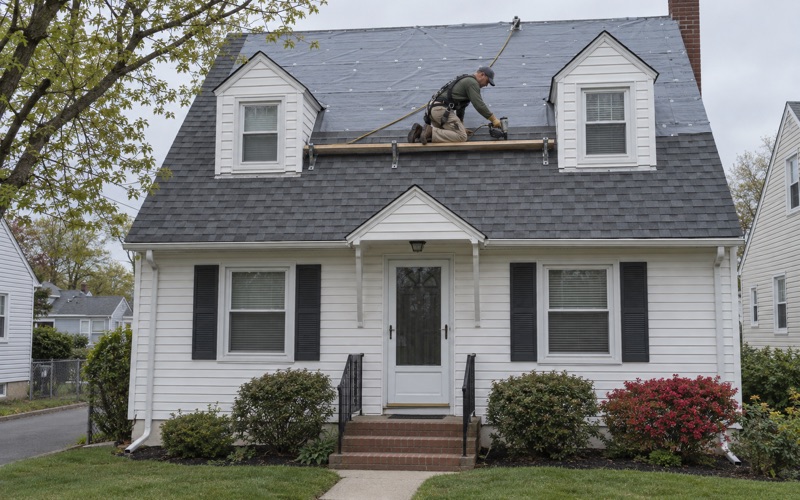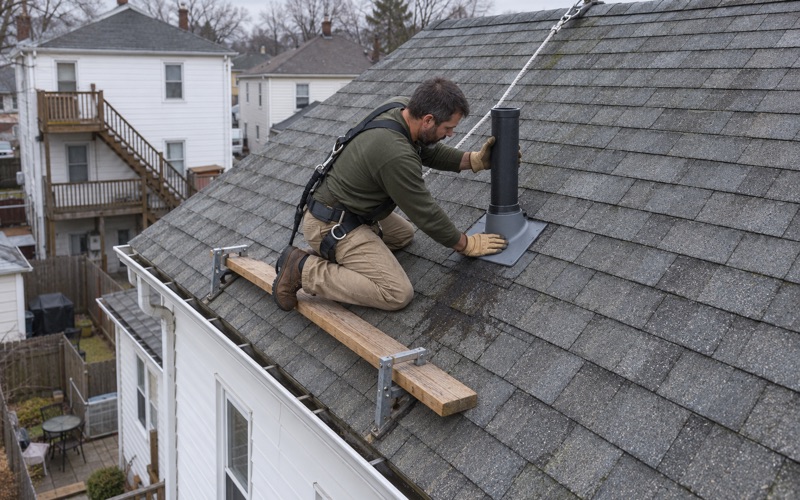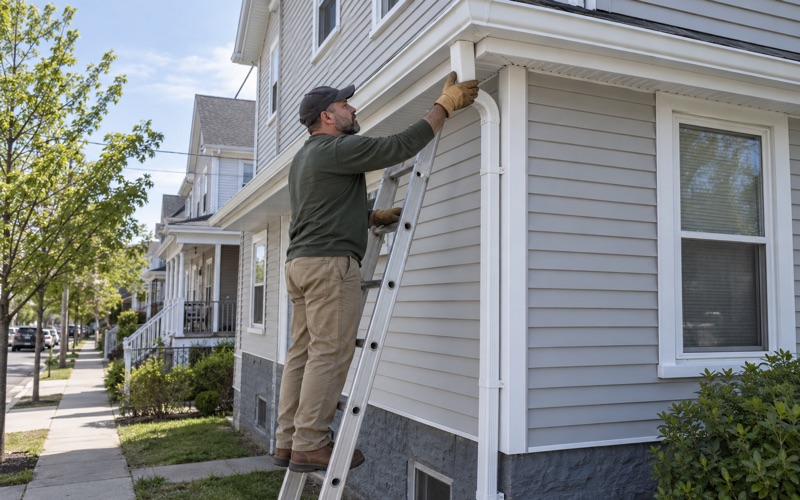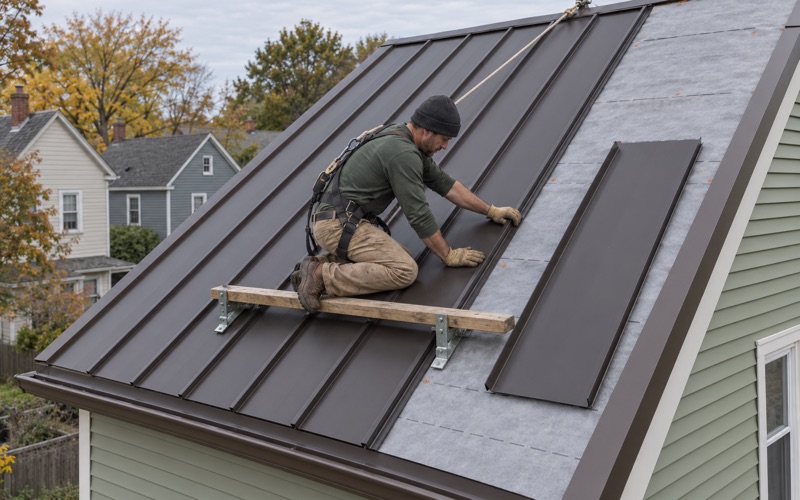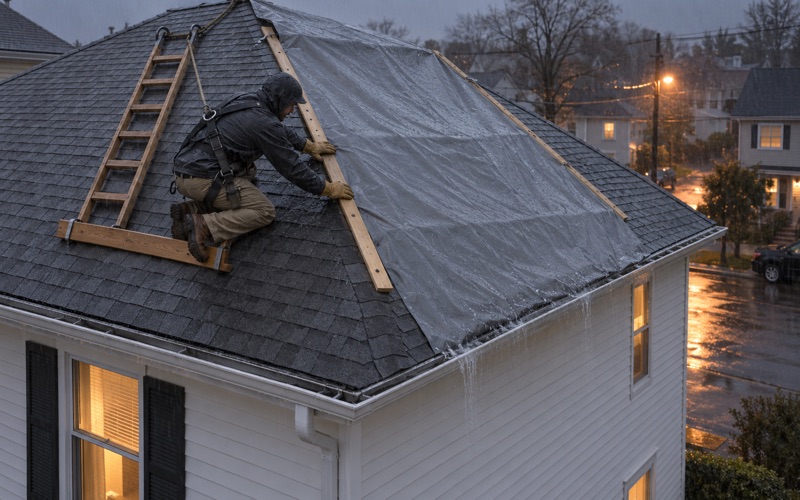
Perth Amboy Elite Roofing has spent more than 20 years on residential roofs, and roofing in Woodland Park often starts with a question about trees rather than shingles. A limb over the eaves, a trunk close to the foundation, or a yard with no obvious spot for a container can shape the whole job. We sort those questions out with the owner before delivery day, not during it.
Every leak call gets two looks from us: one on the roof and one in the attic or at the top-floor ceiling, so we know where the water actually gets in before we price anything. If a repair will do the job, we say so plainly, and replacement only comes up when it is the honest answer. That order matters on a shaded roof, where a damp patch can come from a clogged valley rather than a failed shingle.
When a full replacement is the right call, our written scope puts tear-off, decking, underlayment, flashing, ventilation and gutters on separate lines. An owner can hold our estimate beside anyone else’s and compare it item by item. The sections below cover the borough’s tree rules, the permit question for trees near the house, and how we stage a job so the trees that stay are left alone.
Woodland Park’s Tree Permit and Your Roof
What Chapter 27 Covers
Woodland Park amended Chapter 27 of its code with Ordinance 23-18, introduced in August 2023 and adopted that September. Under Section 27-6, any tree of 4-inch caliper or greater, measured at 4.5 feet, needs a tree removal permit before it comes down. That threshold catches most of the mature trees that end up hanging over a roof.
The ordinance text we read deals with removal, not routine care, and we do not offer opinions on what the borough expects for pruning. If a homeowner wants to know what the chapter says about trimming, the borough is the place to ask. Our concern is narrower: knowing which trees around the house fall under the rule so the roof plan reflects them from the start.
The Fee and Mitigation Side
Section 27-16 sets the permit fee at $50 for one to five trees, and the first tree removed is free of mitigation. Anything beyond that first tree is the borough’s to calculate, so we never guess at it in a roofing estimate. For an owner weighing whether one overhanging tree should come down before a new roof goes on, that fee tier is a useful starting fact.
We are a roofing company, not a tree service, and the application belongs to the property owner and whichever tree contractor they hire. What we can do is point out, during the roof inspection, which limbs and trunks are affecting the roof and why. That gives the owner something concrete to bring to the borough and to an arborist before the roof is put on the calendar.
Who Handles What at the Borough
Tree permits and roof work run through different channels, which surprises some owners. Replacing the covering on a detached one- or two-family house is treated as ordinary maintenance under N.J.A.C. 5:23-2.7, while structural deck or framing work, attached homes and multifamily buildings go through the borough’s Department of Inspections. That office sits in the Municipal Building at 5 Brophy Lane.
Inspections there are booked by phone at 973-345-8100, extension 103, and a December 2024 borough sheet lists weekday mornings from 10:00 a.m. to 12:00 p.m. When a tear-off turns up rotted framing that changes the job, we tell the owner before work continues. We then plan around that inspection window rather than guessing at it.
Looking for roofing closer to Edgewater? See Roofing in Edgewater.
Trees Within 15 Feet, Dead Limbs and Hazards
The 15-Foot Provision
Section 27-17(a) lists the trees that may be approved for removal, and one category is any tree located within 15 feet of any building. Dead trees and trees that pose a safety hazard sit on the same list. On a lot where a trunk stands close to the house, that provision is what makes a removal request worth putting in front of the borough.
The word that matters is may. The borough still decides each application, and a tree within 15 feet still needs its permit before anyone cuts it. We plan the roof as though the tree is staying until the owner has the borough’s answer in hand.
What a Close Tree Does to a Roof
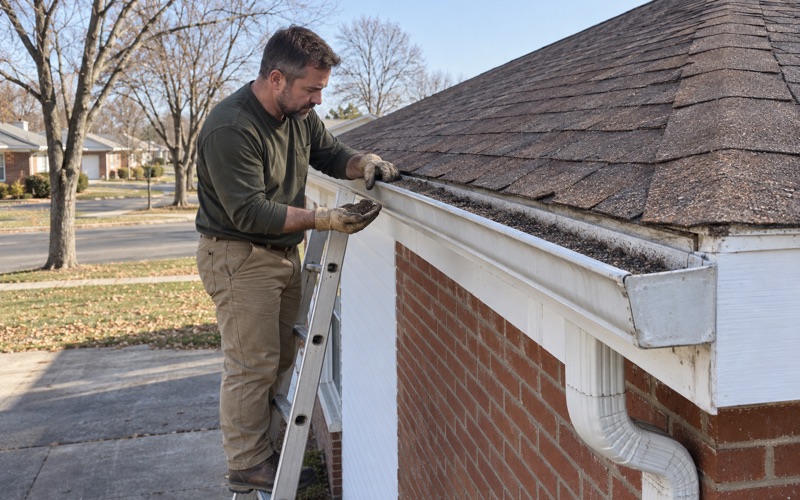
A trunk that close to the wall usually puts a canopy over part of the roof. Leaves and needles pile up in valleys and gutters, shade keeps the surface damp longer after rain, and limbs that rub the roof can scrape granules off the shingles beneath them. Those are the conditions we look for along the eaves and in the valleys on any wooded lot.
Inside, we check the attic deck under the shaded slope for staining or soft spots, because that is where long damp periods show up first. If decking turns out to be damaged once the old roof is off, we photograph it and show the owner before replacing it, at the per-sheet price written into the contract. Nothing about the deck arrives as a surprise on the invoice.
Dead and Hazardous Trees Over the Roof
A dead tree leaning toward the house is a different conversation from a healthy one that simply casts shade. The ordinance names dead and hazardous trees among those that may be approved, and a limb that fails onto a fresh roof can undo the work in an afternoon. When we see one during an inspection, we tell the owner directly and suggest the tree question be settled first.
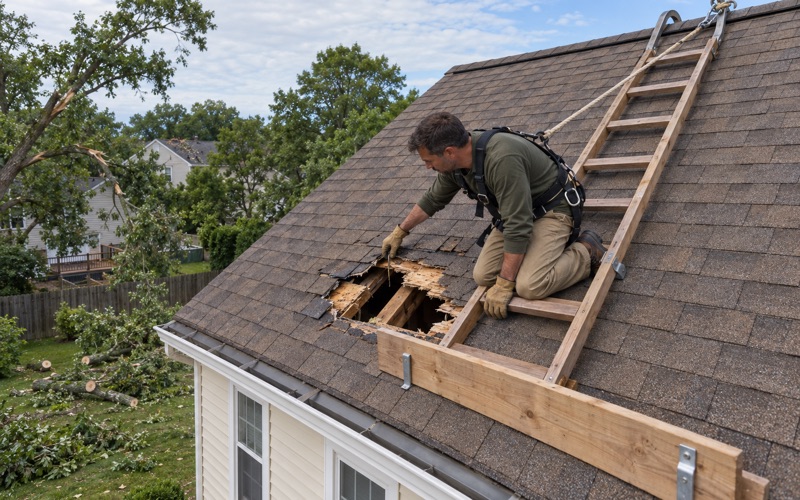
If a limb has already come down, we photograph the damage and write it up for the owner’s own insurance claim. We will meet the adjuster at the house when asked, and our report sticks to the roof, leaving the tree to the tree contractor. A tarp or temporary patch can hold the opening while the permit and any removal are sorted out.
Keeping Materials and Equipment 10 Feet From Trees
What Section 27-19 Says
Section 27-19(b)3 of the same chapter bars storing building material or debris, and placing construction equipment, within 10 feet of any tree. On a roof job that covers almost everything we bring: shingle bundles, underlayment rolls, the debris container, and any lift or hoist. The rule protects every tree that stays on the lot, not just the one beside the house.
Ten feet sounds small until it is measured from every trunk on a tight lot at once. A driveway lined with trees on both sides can leave very little open ground for a container. That is why we walk the yard with a tape measure before ordering a dumpster, not after it arrives.
Placing the Container and Deliveries
We mark out the 10-foot zones around each tree during the estimate visit and fit the container, the material drop and the work path into what is left. Sometimes that means a smaller container swapped out more often, or shingles delivered in two loads instead of one. Those choices are written into the scope so the owner sees them before signing.
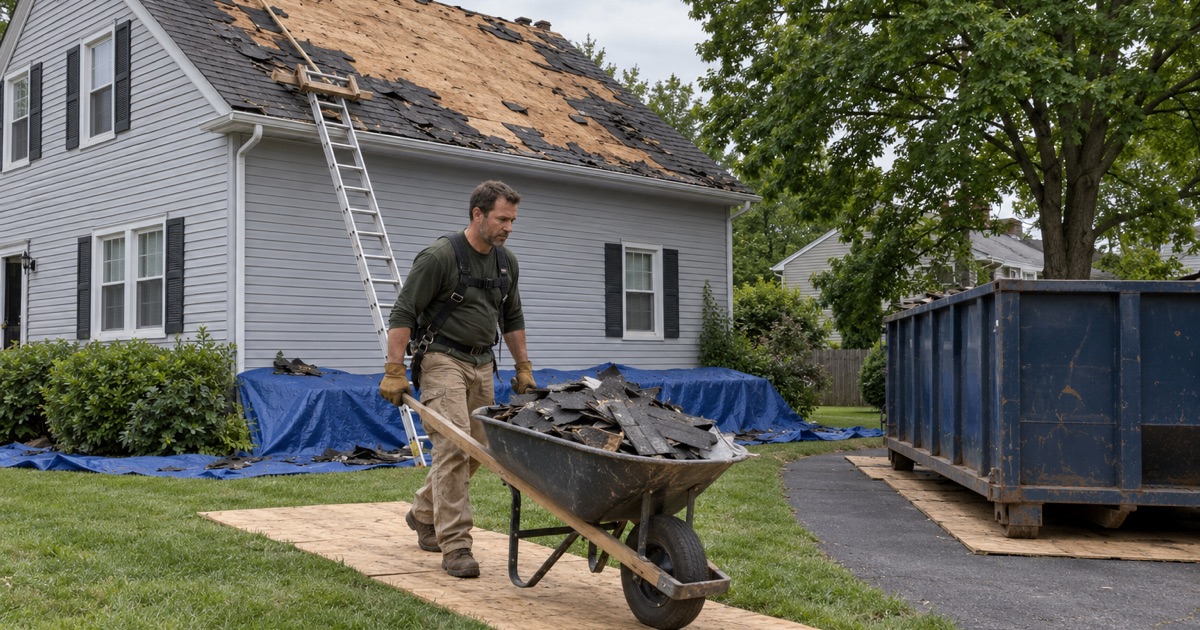
Roof debris comes off the eaves, so we also watch where it lands. Tarps go down over beds and lawn, chutes run into the container instead of onto root zones, and nothing is piled against a trunk overnight. At the end of each work day the yard, driveway and gutters are cleaned, including a magnet sweep for roofing nails.
Lifts, Ladders and the Canopy
Equipment counts under the rule just as material does. A lift or material hoist has to sit clear of the 10-foot zone, which can change which side of the house we load from. On some wooded lots the answer is hand-carrying bundles a longer distance rather than parking a machine beside a tree.
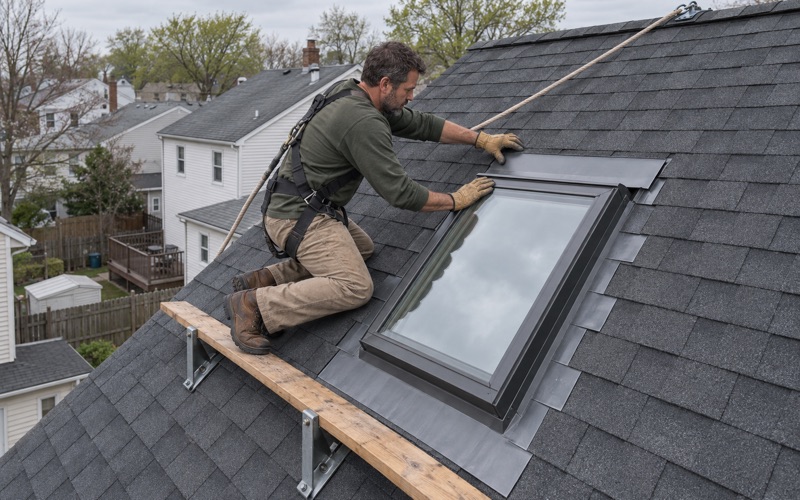
Overhead, low limbs can block a ladder line or a hoist path. Any work on the tree itself is for the owner and their tree contractor to arrange under the borough’s rules, so we plan routes around branches rather than through them. Fall protection still follows the OSHA residential roofing rule at 6 feet, whatever the canopy looks like.
Staging a Re-Roof on a Wooded Woodland Park Lot
Order of Operations
On a lot with an overhanging tree, the sequence matters more than the shingle choice. First the owner decides whether to apply for a removal permit, then the tree contractor carries out any work the borough allows, and only then do we schedule tear-off. Putting a new roof on before a removal invites dropped limbs and a bucket truck working right over fresh shingles.
If the owner keeps the tree, we plan for it instead. That usually means closer attention to valleys, gutters and the drip edge where debris collects, along with a conversation about whether gutter guards make sense under that canopy. Our scope states which of the two plans we are building around.
Materials That Suit a Shaded Roof
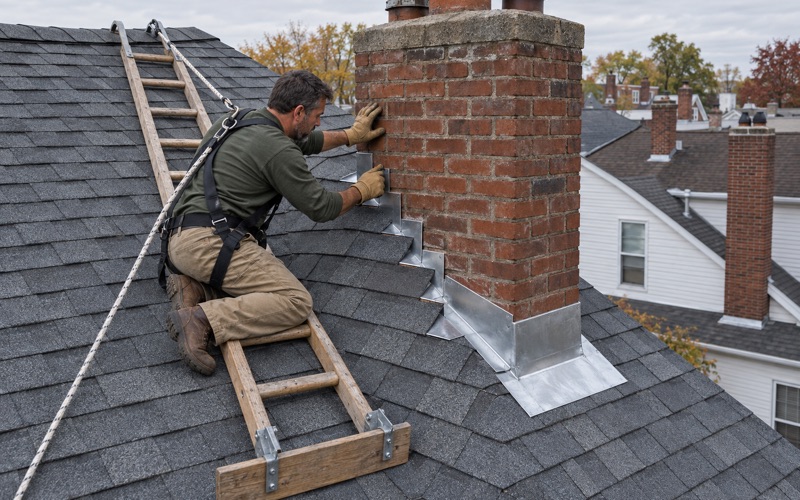
Shaded slopes stay damp, so underlayment and flashing get as much attention as the shingles themselves. We run self-adhering ice and water barrier meeting ASTM D1970 in the valleys and at the eaves, with synthetic underlayment across the field. Step, counter and chimney flashing is replaced with the new roof rather than reused under it.
For the shingle itself, architectural laminated lines such as GAF Timberline HDZ, Owens Corning Duration or CertainTeed Landmark are common choices, and we name the product in the estimate. Ventilation belongs to the same scope, because a ridge vent works only with enough soffit intake behind it. We show the owner how the net free area works out before anything is installed.
Local Climate and the Paperwork
The nearest climate normals station is in neighboring Little Falls, where the 1991-2020 record shows an annual mean of 53.1 degrees. The borough itself falls in National Weather Service forecast zone NJZ004, Eastern Passaic, issued from the Upton, New York office. We watch that forecast for a dry window before a tear-off, since an open deck under wet branches is the wrong combination.
Our contracts follow New Jersey’s home improvement rules, including the three-business-day cancellation notice on contracts over $500. The contract carries the decking price, the material list and the staging plan around the trees, so the owner and our crew work from the same page. When the job is done, the yard should look the way it did before we arrived, with every tree that was meant to stay still standing.
- 20+ Years in Roofing
- Itemized Written Estimates
- Attic-to-Roof Leak Tracing